IoT App Development Services

One team for the whole connected stack. We build device firmware, cloud platforms, real-time dashboards and companion mobile apps, so your product ships as one system instead of four vendors pointing at each other.

Clutch
4.9
Verified client reviews
GoodFirms
4.9
Top app developers, USA
DESIGNRUSH
5.0
Accredited agency
upwork
100%
Top-rated agency

Trusted by teams worldwide

Connexate Dabble Joyscore Meshmedia Oaky Setia Haruman Amity University StatusNeo Xebia SKA India Axis Bank Wave Sugar

From Integration to Impact: Our Complete Suite of IoT Development Services

From healthcare and manufacturing to logistics and property, enterprises are moving to connected operations. Six service lines cover every layer of that shift, from the firmware on the board to the dashboard your team runs the business from.

Our Services

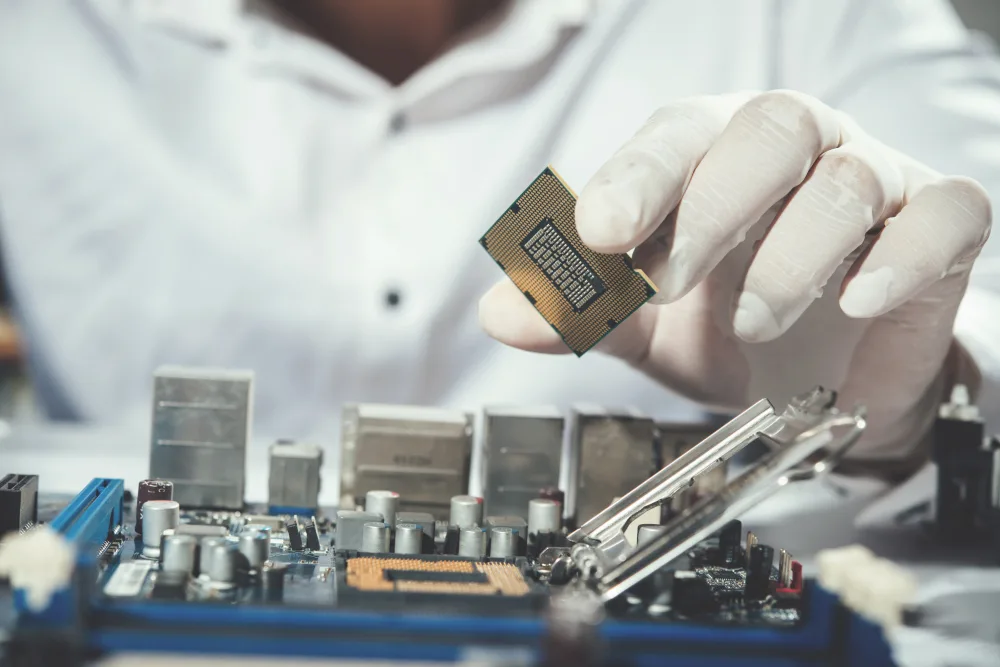
Engineer fitting a processor onto a circuit board
01 · Service line

Firmware & Embedded Development

  • Custom firmware for microcontrollers
  • Sensor integration and drivers
  • Low-power and battery optimisation
  • Secure boot and encrypted OTA updates
  • Arduino, ESP32 and RTOS
Explore Firmware
Cloud platform architecture on a developer workstation
02 · Service line

IoT Cloud Platform Development

  • AWS IoT, Azure IoT and Google Cloud
  • Ingestion from thousands of devices
  • Time-series storage and querying
  • Rules, triggers and automation
  • Sub-second data pipelines
Explore Cloud
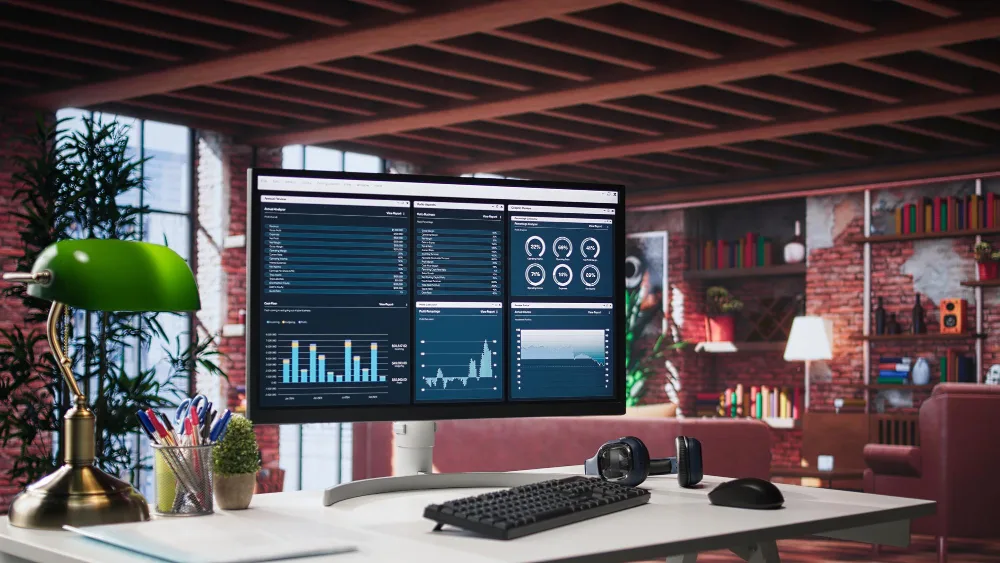
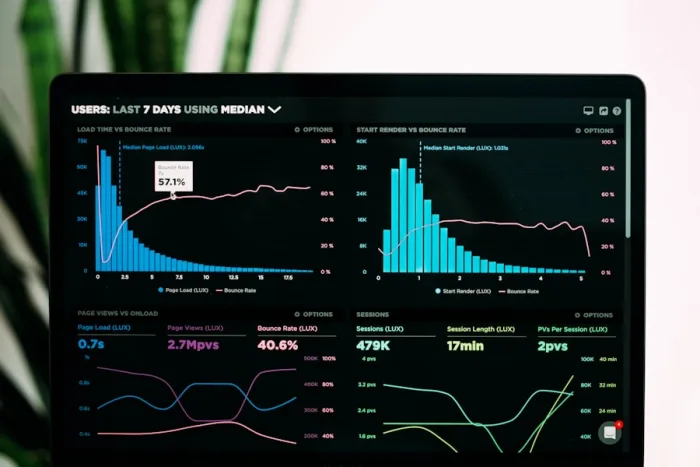
Real-time operations dashboard on a desktop monitor
03 · Service line

Real-Time Monitoring Dashboards

  • Live sensor visualisation
  • Threshold alerts and escalation
  • Grafana and custom web apps
  • WebSocket streaming
  • Role-based operator views
Explore Dashboards
Connected device controls projected from a mobile phone
04 · Service line

IoT Mobile App Development

  • iOS and Android device control
  • BLE and WiFi provisioning
  • Push alerts and notifications
  • Remote configuration
  • Offline-first sync
Explore Mobile Apps
Technician managing connected building systems on a tablet
05 · Service line

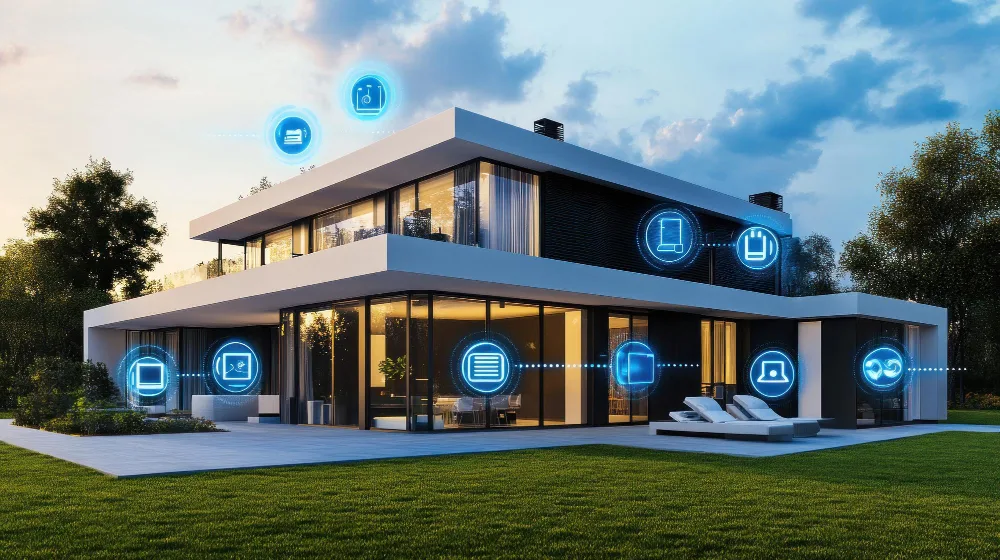
Smart Home & Building Automation

  • Lighting, HVAC and energy control
  • Zigbee, Z-Wave and Matter
  • Security and access control
  • Voice assistant integration
  • Multi-property management
Explore Smart Home
Industrial plant at night linked by an IoT sensor network
06 · Service line

Industrial IoT (IIoT) Solutions

  • Predictive maintenance
  • Asset tracking and OEE
  • SCADA, PLC and OPC-UA integration
  • Quality and safety monitoring
  • Production analytics
Explore IIoT
Business Case

What Are the Benefits of IoT App Development?

Connecting a device is the easy part. The return comes from what you do with the data once it arrives, so here is where IoT actually pays for itself.

Real-time operational visibility

Stop running the business on yesterday's spreadsheet. Live telemetry replaces manual reporting, so the number on the dashboard is the number in the field.

  • Live asset and fleet position
  • Condition and threshold alerts
  • One source of truth across sites

Predictive maintenance

Vibration, temperature and duty-cycle data tell you a machine is drifting long before it stops. Service gets scheduled instead of scrambled.

  • Anomaly detection on live telemetry
  • Failure prediction from sensor history
  • Maintenance scheduled around production

Infrastructure that scales

The architecture that handles a ten-device pilot should handle the ten-thousandth device without a rewrite. We design for the fleet you expect, not the one you have.

  • Per-device identity and provisioning
  • Time-series storage built for volume
  • Staged OTA rollout across the fleet

Better service delivery

Remote diagnostics mean fewer truck rolls and faster resolution. Connected products also open recurring revenue that hardware alone cannot.

  • Remote diagnostics and configuration
  • Usage data that guides the roadmap
  • Subscription and service-tier models
Engineer working with a holographic model on a connected-systems workstation

Connected Devices That Actually Think

We don't just move sensor readings to a database. Six engineering disciplines turn raw device data into decisions, backed by our wider AI development and cloud teams. Already have the device and only need the app around it? See our hardware app development service.

[1] Predictive Maintenance

Models read sensor patterns and flag equipment failures before they happen, cutting downtime by up to 40%.

[2] Edge AI & Vision

Quality inspection, object detection and safety monitoring that run on the device, with no cloud round-trip.

[3] Anomaly Detection

Live monitoring that spots abnormal device behaviour and pages the right operator instantly.

[4] Device Fleet Management

Remote provisioning, configuration, firmware rollout and health monitoring across the whole fleet.

[5] Security by Design

TLS everywhere, X.509 device identity, secure boot and signed OTA updates, built in from day one.

[6] Time-Series Analytics

Storage and querying built for high-frequency sensor data, so dashboards stay fast as volume grows.

Technologies

Latest IoT Technologies for Smart Integration

The technologies we reach for when a connected product needs to do more than report a reading. Pick one to see where it earns its place in a build.

AI-Powered IoT

Machine learning turns raw device telemetry into decisions. Models run at the edge for sub-second response and in the cloud for fleet-wide pattern detection, driving predictive maintenance, anomaly detection and closed-loop automation.

5G & Cellular Connectivity

Low-latency links for devices that move or sit far from Wi-Fi. We design around NB-IoT and LTE-M for battery-powered sensors, and 5G where bandwidth and latency budgets are tight, with graceful fallback when coverage drops.

Device Security

Security designed in at the board, not bolted on after. Secure boot, per-device identity, mutual TLS, encrypted storage and signed over-the-air updates, so a compromised unit never becomes a compromised fleet.

Digital Twins

A live virtual model of the physical asset, fed by its own telemetry. Simulate changes, forecast wear and rehearse failure modes before touching production hardware.

Smart Sensors & Edge

Sensor selection, calibration and edge pre-processing so only meaningful data leaves the device. Less bandwidth, longer battery life and lower cloud spend at fleet scale.

LPWAN (LoRaWAN & NB-IoT)

Kilometre-range links for sensors that must run years on one battery. The right fit for agriculture, utilities metering and distributed infrastructure where mains power and Wi-Fi are not options.

Wearables & Healthcare IoT

BLE pairing that a patient can complete unaided, reliable background sync and power budgets measured in days. Built to HIPAA expectations where clinical data is involved.

Building a Connected Product? Get a Free Feasibility Audit.

One call about your device, your environment and your data tells you which protocol fits, what the hardware really needs to do and a fixed budget. So your first dollar goes toward something that will actually work in the field.

Get Your Free Audit

Free · No obligation · Delivered within 48 hours

Engineer reviewing a connected production line on a tablet
Industries

IoT Solutions Across Every Industry

Six verticals where we've shipped connected products, plus agriculture, construction and smart cities work on request. See our healthcare and manufacturing practices for deeper detail, or enterprise software when the IoT platform has to reach the rest of the business.

[01] Manufacturing & IIoT

Smart factory automation on the machines you already run.

  • Predictive maintenance
  • Quality monitoring
  • SCADA and PLC integration
Know more about Manufacturing
[02] Healthcare & MedTech

HIPAA-ready connectivity for patients, devices and hospitals.

  • Remote patient monitoring
  • Medical device connectivity
  • Hospital asset tracking
Know more about Healthcare
[03] Smart Home & Buildings

Lighting, climate, security and energy under one platform.

  • HVAC and lighting control
  • Access and security
  • Energy management
Know more about Real Estate
[04] Logistics & Supply Chain

Know where every asset is and what condition it's in.

  • Asset and fleet tracking
  • Cold-chain monitoring
  • Telematics
Know more about Logistics
[05] Energy & Utilities

Metering and grid visibility across distributed sites.

  • Smart metering
  • Grid monitoring
  • Energy optimisation
Know more about Enterprise Software
[06] Consumer IoT & Wearables

Products people live with, so setup and battery life matter.

  • BLE pairing and onboarding
  • Companion mobile apps
  • Low-power firmware
Know more about Hardware App Development
[07] Agriculture & AgriTech

Field-scale sensing where power and coverage are the hard constraints.

  • Soil & crop sensing
  • Irrigation automation
  • Livestock tracking
Know more about Agriculture
[08] FinTech & Payments

Connected payment hardware and the compliance that comes with it.

  • Smart POS terminals
  • ATM & kiosk telemetry
  • Tamper detection
Know more about FinTech
[09] Real Estate & PropTech

Building intelligence that occupiers and owners both see the value of.

  • Occupancy sensing
  • Smart access control
  • Energy sub-metering
Know more about Real Estate
Measurable Impact

Numbers From Shipped IoT Builds

200+

Products shipped

Delivered since 2018 across mobile, cloud and connected-device builds.

38,412

Device scans a day

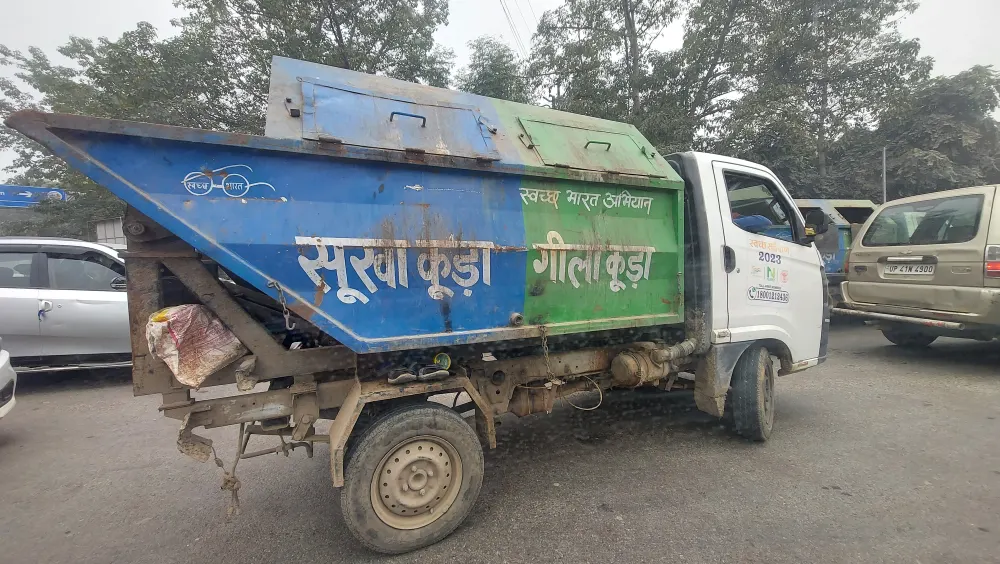
Daily RFID scan volume on the connected waste-collection fleet we built.

312 t

Weighed automatically

Tonnage captured every day from connected scales, with no manual entry.

15+

Countries served

Client operations running on Appther-built platforms worldwide.

Gain a Competitive Edge

Why Partner With Appther for Custom IoT Development?

Plenty of agencies can build an app. Fewer will put your actual device on the bench in week one and tell you what it can and cannot do. As a custom IoT development company we cover the whole connected stack in house, alongside our AI development and cloud infrastructure teams.

01

One team, whole stack

Firmware, cloud, dashboards and mobile under one roadmap, from device management through to the APIs your other systems consume. No three-vendor standoff when a packet goes missing between the device and the database.

02

Tested on real hardware

Physical devices in the loop from the first sprint, across OS versions, RF interference, low battery and firmware variants. Never emulators alone.

03

AI on the device stream

As an AI-first company we put intelligence where the data is: anomaly detection on telemetry, on-device inference and edge computing that keeps working when the link drops. Where it earns its keep we build digital twins on the live stream, backed by our AI engineering practice.

04

Fixed scope, fixed price

Discovery ends with a written scope and a fixed quote. You own 100% of the firmware, cloud code and documentation, with an NDA signed up front.

Security & Compliance

How Does Appther Secure Device Data?

Connected products collect data that carries real obligations. Here is how we handle each category, and only what we can honestly claim.

Sensor data is personal data more often than teams expect. We design the data model around minimisation first, so compliance is a property of the architecture rather than a later retrofit.

GDPRLawful basis mapped per data type, EU residency options, and working export and deletion endpoints built in from the first sprint.
CCPA / CPRAConsumer disclosure, opt-out handling and deletion workflows wired into the device and account lifecycle.
India DPDP ActConsent capture and notice flows for deployments serving Indian users, with purpose limitation on telemetry.
Data minimisationWe collect the readings the product needs and drop the rest at the edge, which cuts both risk and bandwidth cost.

A fleet is only as secure as its weakest device. Identity, transport and update paths are treated as one system, not three separate features.

Per-device identityX.509 certificates issued per device so a compromised unit can be revoked without touching the rest of the fleet.
Encrypted transportTLS for every device-to-cloud connection, AES-256 at rest, and encrypted BLE bonding where the hardware supports it.
Secure boot & signed OTAFirmware images signed and verified on the device, with staged rollout and resume-on-failure in the update flow.
Network segmentationDevice traffic isolated from business systems, with least-privilege rules between ingestion, storage and application tiers.

The controls below describe how we build and review code. They are engineering practices we apply on every project, not certifications we hold.

OWASP Mobile Top 10Reviewed against every mobile release, with secrets kept out of the app binary as a standing rule.
ISO/IEC 27001 alignedAccess control, change management and audit logging modelled on the standard's technical controls.
Secure coding & reviewPeer review on every merge, dependency scanning in CI, and secrets management outside the repository.
Penetration testingThird-party testing arranged before launch on request, with findings tracked to closure.

To be explicit: Appther is not a certification body. Formal ISO, SOC 2 or HIPAA attestation of your finished product sits with your compliance team and its auditor. We build and document so that audit is straightforward.

Regulated sectors change the architecture, not just the paperwork. We scope these constraints during discovery so they never surface late.

HIPAA-ready buildsFor health devices we architect to the technical safeguards: access control, audit logs and BAA-compatible cloud services.
PCI DSS scope reductionPayment-enabled kiosks and vending built so card data stays inside the payment terminal and out of your systems.
Industrial safety systemsRead-only integration patterns with SCADA and PLC layers so monitoring never becomes a control-path risk.
Radio & regional approvalsWe flag the certification path your hardware will need early, and work alongside the lab or partner handling it.

Companion apps get rejected for predictable reasons. We build against the store rules that trip up connected products specifically.

Apple App Store reviewBackground Bluetooth usage, permission strings and accessory declarations prepared to survive first submission.
Google Play policyLocation and nearby-device permission disclosures handled correctly, with a data safety form that matches the build.
WCAG 2.2 AAContrast, focus order and screen-reader labelling checked on the app, not just the marketing site.
Offline & failure statesEvery pairing and sync failure gets a message a real user can act on, which is also what reviewers look for.
Tech Stack

Protocols, Platforms & Frameworks

The IoT software development stack we build on, from sensor integration and firmware through to time-series data and performance work once the fleet is live.

From the radio on the board to the dashboard on the wall, grouped by the layer it belongs to.

  • MQTT
  • CoAP
  • Bluetooth LE
  • Wi-Fi
  • LoRaWAN
  • NB-IoT
  • Zigbee
  • Z-Wave
  • Matter
  • MQTT
  • CoAP
  • Bluetooth LE
  • Wi-Fi
  • LoRaWAN
  • NB-IoT
  • Zigbee
  • Z-Wave
  • Matter
  • ESP32
  • Arduino
  • Raspberry Pi
  • STM32
  • Nordic nRF
  • FreeRTOS
  • Zephyr
  • C / C++
  • Embedded Linux
  • ESP32
  • Arduino
  • Raspberry Pi
  • STM32
  • Nordic nRF
  • FreeRTOS
  • Zephyr
  • C / C++
  • Embedded Linux
  • AWS IoT Core
  • Azure IoT Hub
  • Google Cloud IoT
  • Node.js
  • Python
  • Docker
  • Kubernetes
  • Terraform
  • PostgreSQL
  • AWS IoT Core
  • Azure IoT Hub
  • Google Cloud IoT
  • Node.js
  • Python
  • Docker
  • Kubernetes
  • Terraform
  • PostgreSQL
  • Swift
  • Kotlin
  • React Native
  • Flutter
  • InfluxDB
  • TimescaleDB
  • Grafana
  • TensorFlow Lite
  • Swift
  • Kotlin
  • React Native
  • Flutter
  • InfluxDB
  • TimescaleDB
  • Grafana
  • TensorFlow Lite
Feature Set

Key Features We Deliver in IoT Applications

The building blocks that show up in most connected platforms we ship, from first provisioning through to fleet-wide analytics.

Architecture

IoT Architecture, Layer by Layer

A connected product is ten layers that have to agree with each other. Get one wrong and the symptom usually shows up somewhere else, which is why we design them together rather than in sequence.

Devices

The endpoint itself: a microcontroller or single-board computer running your firmware. Chosen against power budget, unit cost and how long it has to survive in the field.

01

Sensors

Temperature, vibration, GPS, current, image. Selection and calibration decide the quality of everything downstream, because no cloud layer recovers a bad reading.

02

Gateway

Aggregates nearby devices and bridges them to the internet. Where devices speak BLE or Zigbee, the gateway is what translates them onto IP.

03

Edge Computing

Filtering and inference next to the hardware. Only meaningful events leave the site, which cuts bandwidth, extends battery life and keeps the system working when the link drops.

04

Cloud Platform

Ingestion, device identity, provisioning and staged OTA rollout, on AWS IoT Core, Azure IoT Hub or Google Cloud.

05

Database

A time-series store sized for high-frequency telemetry, alongside a relational store for the business records that describe it.

06

APIs

REST for records and WebSockets for live streams, versioned and authenticated, so your own systems and developers can build against the fleet.

07

Mobile App

Pairing, provisioning and control in the user’s hand. Offline-first, because a connected product that needs a connection to set up will fail at the doorstep.

08

Admin Dashboard

Fleet health, alert thresholds and role-based access for the operations team who run the deployment day to day.

09

AI Layer

Prediction, anomaly detection and computer vision applied to the live stream, trained on your own operating history rather than a generic benchmark.

10

Devices

The endpoint itself: a microcontroller or single-board computer running your firmware. Chosen against power budget, unit cost and how long it has to survive in the field.

01

Sensors

Temperature, vibration, GPS, current, image. Selection and calibration decide the quality of everything downstream, because no cloud layer recovers a bad reading.

02

Gateway

Aggregates nearby devices and bridges them to the internet. Where devices speak BLE or Zigbee, the gateway is what translates them onto IP.

03

Edge Computing

Filtering and inference next to the hardware. Only meaningful events leave the site, which cuts bandwidth, extends battery life and keeps the system working when the link drops.

04

Cloud Platform

Ingestion, device identity, provisioning and staged OTA rollout, on AWS IoT Core, Azure IoT Hub or Google Cloud.

05

Database

A time-series store sized for high-frequency telemetry, alongside a relational store for the business records that describe it.

06

APIs

REST for records and WebSockets for live streams, versioned and authenticated, so your own systems and developers can build against the fleet.

07

Mobile App

Pairing, provisioning and control in the user’s hand. Offline-first, because a connected product that needs a connection to set up will fail at the doorstep.

08

Admin Dashboard

Fleet health, alert thresholds and role-based access for the operations team who run the deployment day to day.

09

AI Layer

Prediction, anomaly detection and computer vision applied to the live stream, trained on your own operating history rather than a generic benchmark.

10

Protocols we build on

MQTTBLEZigbeeLoRaWANWi-FiCellular (NB-IoT / LTE-M)WebSocketsCoAP

Which one fits is decided by range, power budget and data volume, not preference. See our hardware app development and AI development services for the layers either side of the device.

Our Process

End-to-End IoT Development Process

Thirteen stages take a connected product from first conversation to a fleet in the field. Hardware punishes guesswork, so the risky parts get proven early and you see a working build at the end of every sprint.

Week 1

Discovery

Use-case analysis, constraints and success criteria before any hardware or cloud decision is locked.

What we doMap the data you actually need, the environment the device lives in and the regulatory obligations attached to it. Existing hardware and SDKs get reviewed here, not later.
What you getA written problem statement, the constraints that will drive every later choice, and a shortlist of viable approaches.
Week 1–2

Business Analysis

What the connected product has to be worth before it is worth building.

What we doModel the operational saving or revenue the deployment is meant to produce, size the fleet at launch and at scale, and set the metrics go-live will be judged on.
What you getA business case with the numbers behind it, and a scope you can hold us to.
Week 2–3

Hardware Selection

Choosing the board, sensors and radios against range, power budget and unit cost.

What we doShortlist microcontrollers and sensors, check availability and lifecycle, and prototype on real silicon. ESP32, STM32, Nordic nRF and Raspberry Pi are the usual candidates.
What you getA bill of materials with unit costs, measured power figures and a justification for every part.
Week 3–8

Firmware Development

Embedded software written against the real board, not a simulator.

What we doSensor drivers, sleep scheduling, buffering for offline periods, secure boot and the OTA pipeline. Written in C/C++ on FreeRTOS or Zephyr, or embedded Linux where the workload needs it.
What you getField-ready firmware, a reproducible build, and battery life measured rather than estimated.
Week 3–6

Connectivity Planning

Picking the protocol against range, power and data volume, then proving it.

What we doCompare BLE, Wi-Fi, Zigbee, LoRaWAN, NB-IoT and cellular against your site survey, then stress the chosen link with real interference and real distance.
What you getA protocol decision with the test data behind it, and a fallback path for when coverage drops.
Week 5–12

Cloud Infrastructure

The platform that ingests, stores and secures everything the fleet sends.

What we doStand up ingestion on AWS IoT Core, Azure IoT Hub or Google Cloud, size the time-series store, and set up per-device identity, provisioning and staged rollout.
What you getInfrastructure as code, a documented data model, and a cost projection at ten times your launch fleet.
Week 7–13

API Development

The contract between devices, your apps and the systems you already run.

What we doBuild REST and WebSocket APIs for live telemetry, with authentication, rate limiting and versioning. Where it has to reach further, we connect to your ERP, CRM or SCADA.
What you getDocumented, versioned APIs your own developers can build against without asking us.
Week 9–16

Mobile App Development

The companion app people actually pair the device with.

What we doNative Swift and Kotlin, or Flutter and React Native where one codebase should serve both. BLE pairing, offline-first sync and push alerts get the most attention, because that is where connected apps usually fail.
What you getStore-ready iOS and Android builds, tested on physical handsets across OS versions.
Week 10–17

Dashboard Development

Where your operations team runs the fleet, not just looks at it.

What we doLive telemetry, fleet health, alert thresholds and role-based access, backed by a time-series store built for high-frequency data.
What you getAn operations console with the views your team asked for, and exports for the ones they have not thought of yet.
Week 12–19

AI Integration

Intelligence applied where it changes a decision, not because it is on a list.

What we doPredictive maintenance on failure patterns, anomaly detection on live telemetry, and on-device inference where the link cannot be relied on. Grounded in your own operating history.
What you getModels measured against real outcomes, with monitoring so accuracy is tracked after release rather than assumed.
Week 14–21

Testing

Hardware in the loop, not emulators alone.

What we doRegression across OS versions, RF interference, low battery and firmware variants, plus load testing the cloud tier and a security review of the device identity chain.
What you getA test report, a security review and a supervised field pilot before you commit to a rollout.
Week 20–22

Deployment

Production rollout, staged so a bad firmware build never reaches the whole fleet.

What we doStore submission, cloud cutover and phased OTA rollout with sync health watched per firmware version.
What you getA live product, monitoring dashboards and a rollback path that has been tested.
Ongoing

Support & Maintenance

The years after launch, which is where most of a connected product’s life happens.

What we doFirmware and dependency updates, certificate rotation, cost tuning as the fleet grows, and an on-call path for incidents.
What you getA support agreement sized to your fleet, and the same engineers who built it.
Client Voices

Trusted By Teams Who Ship

“Appther built our student competition app exactly the way we envisioned it: easy registration, smooth judging, and real-time results that keep participants engaged.”
Dionna Milem
Dionna MilemOwner · My BOB Team LLC
“Building a mental health app means every detail has to be handled with care, and Appther got that from day one. The product feels warm, simple, and genuinely helpful.”
Bob Singhal
Bob SinghalProfessor of Joy · Joyscore Inc
“Appther exceeded every expectation, on time and on budget, and the final product has been instrumental in scaling our business. A rare engineering partner.”
Johnathan Peffer
Johnathan PefferCEO · Bull's Eye Technologies Inc
“Implementing an ERP across our operations felt daunting at first, but Appther made the transition seamless. Every department now works off a single source of truth.”
Pushpender Kumar
Pushpender KumarGeneral Manager · AB Sugar Ltd
Latest Insights

Notes on Building Connected Products

Field notes from real builds. No hype, just what worked and what didn't.

All Articles
Free 30-Minute IoT Strategy Call

Connected Products Start With One Conversation. Yours Starts Here.

Walk away from one call with the right protocol, a hardware direction, a realistic budget range and a delivery timeline. No pitch deck, no obligation.

Protocol shortlist Budget range Delivery timeline
Book My Free Call
200+Products shipped
4.9★Clutch client rating
15+Countries served
99.9%Production uptime
FAQ

Questions We Hear Every Week

It depends on scope. A connected MVP with one device type, a cloud backend and a mobile app starts in the low five figures. Multi-device platforms with edge AI and fleet management run higher. You get a fixed-price quote after a free scoping call.
A basic IoT MVP including a hardware prototype, cloud backend and mobile app typically takes 3–4 months. Full-scale production platforms with AI analytics, device fleet management and enterprise integrations take 5–8 months depending on complexity.
Both are production-grade, so the answer usually follows your existing estate rather than the feature list. Azure IoT fits teams already on Microsoft identity and data tooling. AWS IoT Core suits teams already on AWS, and has the deeper edge story with Greengrass. We pick during discovery and tell you plainly when the difference will not matter for your workload.
BLE is for short-range, phone-adjacent devices such as wearables and consumer products. Zigbee suits dense mesh deployments inside a building, typically smart home and lighting. LoRaWAN is for long-range, low-power telemetry where a reading every few minutes is enough, such as agriculture and utilities metering. Range, battery life and data rate trade against each other, so the use case decides.
Yes, and on industrial sites it has to. We build offline-first behaviour into both the device and the app: readings buffer locally, queue when the link drops and reconcile on reconnect with conflict handling. Edge computing keeps the critical logic running on site even when the cloud is unreachable.
The cloud architecture is designed to grow from ten devices to ten million without re-engineering. Device management, provisioning and OTA rollout are built for fleet scale from the start, so onboarding the ten-thousandth device is the same operation as the tenth.
Both. We write custom firmware for microcontrollers including ESP32 and Arduino with an RTOS, covering sensor integration, power management, secure boot and signed OTA updates. Where you already have a hardware partner we work to their SDK instead and own everything from the device link upward.
It depends on your use case. MQTT is ideal for low-bandwidth, high-frequency data. BLE suits short-range wearables. WiFi is best for high-bandwidth home devices. LoRaWAN works for long-range, low-power deployments. We help you select the right protocol during discovery.
Yes. We regularly build cloud platforms, dashboards and apps on top of hardware a client already has, and we can also design firmware for new devices. If you have existing SCADA, PLC or ERP systems, we integrate through OPC-UA, Modbus and secure APIs.
IIoT (Industrial IoT) refers to large-scale systems used in industrial settings: smart grids, factory automation and predictive maintenance. Consumer IoT focuses on personal devices like smart home gadgets and wearables. Appther builds solutions for both domains.
We implement TLS encryption for all device-to-cloud communication, X.509 certificate-based device authentication, secure boot for firmware, encrypted OTA updates, network segmentation and regular penetration testing. Security is never an afterthought in our IoT projects.
Real-time operational visibility, predictive maintenance that reduces downtime, automated data collection that removes manual errors, remote monitoring and control, better customer experiences, and new revenue from connected product services.
Absolutely. You own 100% of the firmware, cloud code and hardware documentation we produce. We can also sign an NDA before any discovery conversation.
Yes, and it is a design decision made at the start rather than a migration later. We set up per-device identity, provisioning and time-series storage that behave the same at ten devices and at ten thousand, plus staged OTA rollout so firmware updates reach a growing fleet safely.
They overlap heavily. IoT app development covers the full connected stack including device firmware, the cloud platform and fleet-scale data. Hardware app development is the narrower case where the device already exists and you need the companion app and cloud layer around it. If you have a working device and no firmware gap, that page is the closer fit.
An Engineer Replies Within One Business Day

Let's Build Your Connected Product

Tell us what you want to sense, control or monitor. No sales pitch, just a straight answer on approach, scope, timeline and cost. Prefer email? Use our contact page.

Free 30-min strategy callScoping and honest, practical advice.
Fixed-price quoteDetailed scope and price after discovery, no surprises.
NDA on requestYour idea, designs and code always stay yours.
Prefer to talk now?+91 99114 32288 · sales@appther.com

Book Your Free Strategy Call

Fields marked * are required. We reply within one business day.

🔒 Your details are never shared. NDA available on request.