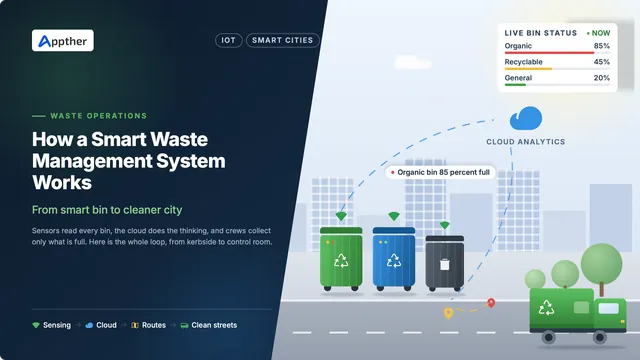
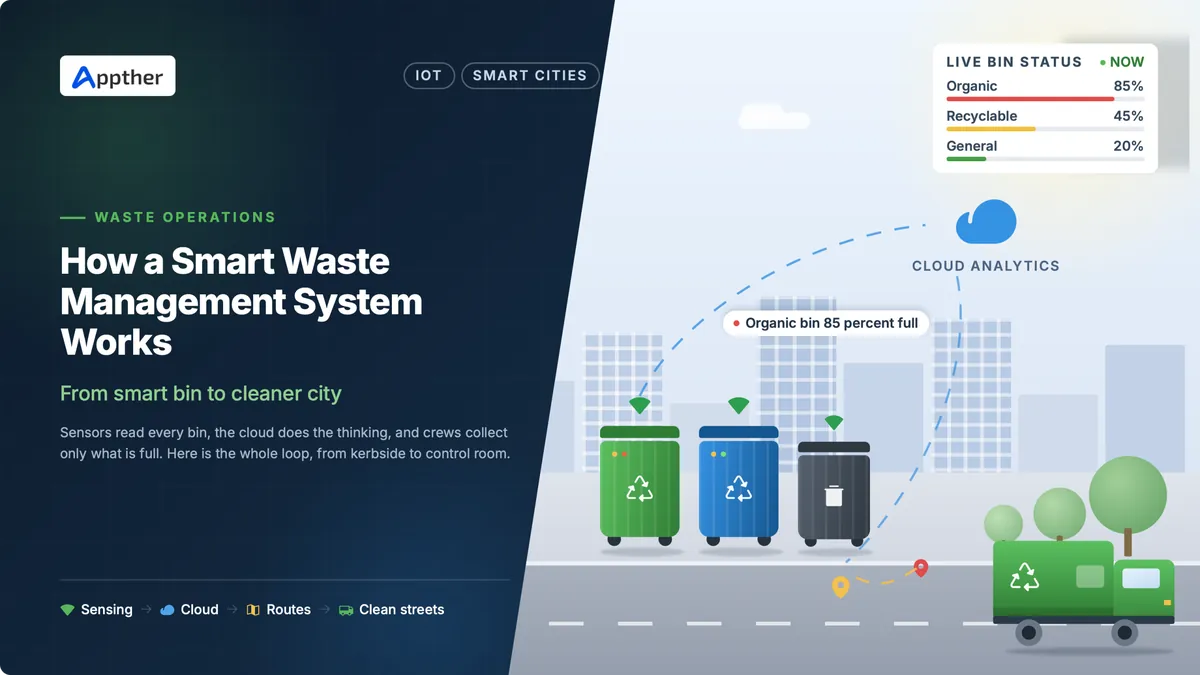
Smart waste management systems are transforming how cities handle waste. These systems use advanced technology to improve efficiency and sustainability.
By integrating IoT, they provide real-time data on waste levels. This allows for optimised collection routes, reducing costs and emissions.
Such systems are crucial for modern urban planning. They help cities manage growing populations and increasing waste.
Smart waste management solutions also support recycling and waste reduction efforts. They contribute to cleaner, more sustainable urban environments.
These systems are part of broader smart city initiatives. They enhance the quality of life by promoting environmental responsibility.
Understanding their benefits is essential for municipalities and waste management companies. Embracing these technologies can lead to significant improvements in waste management practices.
What is a Smart Waste Management System?
A smart waste management system integrates technology to improve waste handling processes. It leverages Internet of Things (IoT) technology to streamline waste collection.
These systems use sensors in waste bins to monitor fill levels. This information is sent to a centralised platform for analysis and decision-making.
The key components of a smart waste management system typically include:
- IoT sensors: installed in bins to track waste levels.
- Data analytics platforms: process and interpret the collected data.
- Mobile applications: provide real-time updates to waste management teams.
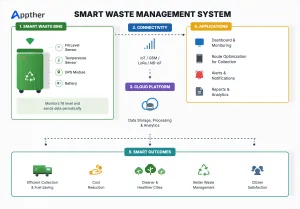
Smart waste management solutions allow for more efficient collection routes. By reducing unnecessary trips, they save time and fuel costs.
With IoT-based insights, cities can allocate resources better. This leads to improved waste management systems and community satisfaction.
How Smart Waste Management Systems Work
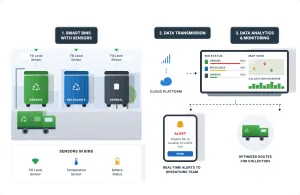
Smart waste management systems operate by connecting waste containers to a network. Sensors monitor fill levels and send this data in real-time.
The information is transmitted to central servers where it is processed. This allows waste management teams to make data-driven decisions.
Waste collection routes are optimised based on the collected data. Routes are adjusted in real-time, reducing travel time and fuel usage.
These systems often feature automated alerts. Notifications are triggered when bins approach capacity or if overflow occurs.
Key functionalities of smart waste management systems include:
- Real-time bin monitoring: continuous tracking of waste levels.
- Route optimisation algorithms: dynamic adjustment of collection schedules.
- Automated notifications: alerts for maintenance or immediate attention.
Advanced data analytics offer insights on waste generation patterns. These insights enable better forecasting and service planning.
Ultimately, smart systems enhance the efficiency and effectiveness of waste operations. By doing so, they contribute to cleaner cities and sustainable practices.
Key Technologies: IoT and Data Analytics
The core of smart waste management lies in IoT and data analytics. IoT enables seamless connectivity between devices, creating an integrated network.
Sensors embedded in waste bins collect real-time data. This data is transmitted via the internet, ensuring swift communication of essential information.
Data analytics transforms raw data into actionable insights. These insights improve decision-making and enhance operational strategies.
Utilising these technologies offers several advantages:
- Predictive maintenance: anticipate and address issues before they escalate.
- Resource optimisation: allocate resources where they are most needed.
- Trend analysis: identify patterns in waste generation and disposal.
IoT devices streamline processes by automating routine tasks. They provide real-time feedback, allowing teams to adapt quickly.
Data analytics helps in mapping the efficiency of operations. By leveraging these technologies, municipalities can maintain smarter, cleaner cities.
Major Benefits of Smart Waste Management Systems
The integration of smart systems has revolutionised waste management. These systems bring multiple advantages, enhancing both efficiency and sustainability.
One major benefit is the optimisation of waste collection routes. Real-time data guides vehicles to bins that need attention. This reduces unnecessary trips, saving fuel.
Improved service reliability leads to increased public satisfaction. Citizens notice when bins are emptied on time.
Smart systems enhance operational transparency. Access to real-time data ensures stakeholders stay informed of system performance.
They also offer flexible solutions that adapt to various community needs. This customisation is key to addressing specific urban challenges.
Another significant advantage is cost reduction. Automated processes lower labour costs and boost resource efficiency.
Smart waste management systems support the circular economy. They encourage recycling by ensuring proper waste sorting.
These systems integrate easily into existing infrastructure. Retrofit options are available, allowing for smoother transitions.
Smart technology helps in better resource allocation. Data-driven decisions ensure manpower and machinery are optimally deployed.
Smart systems foster a cleaner urban environment by preventing overflows. This enhances the overall aesthetic of cityscapes.
Operational Efficiency and Cost Savings
Smart waste management boosts efficiency and reduces costs significantly. Automation eliminates many manual tasks, freeing up workforce resources.
The use of real-time data leads to improved route planning. This optimisation cuts down on fuel expenses and time.
Fewer trips and streamlined operations translate into cost savings. These savings can be substantial over time.
Key features contributing to efficiency and savings include:
- Automated scheduling: ensures timely waste collection.
- Dynamic routing: adapts to real-time changes.
- Resource allocation: deploys manpower where needed most.
Cost savings can be redirected towards further improvements. Investments in new technology improve the entire system.
Environmental Impact and Sustainability
Smart waste management also champions environmental stewardship. By optimising routes, carbon emissions from waste collection vehicles decrease.
Waste reduction is another focal point. Smart bins guide users in sorting waste correctly, boosting recycling rates.
These systems integrate with other smart city initiatives, contributing to overall urban sustainability. Cleaner cities mean healthier environments.
They aid in achieving sustainability goals through:
- Reduced landfill waste: encourages recycling.
- Lower carbon footprint: streamlined operations result in fewer emissions.
- Efficient resource use: minimises wastage of time and energy.
By monitoring and predicting waste patterns, cities can plan better. This planning leads to more efficient waste management practices.
Sustainability efforts are supported through data-driven insights. These insights help define future waste management policies.
Real-World Applications and Case Studies
Smart waste management systems have gained traction globally, impacting cities in diverse ways. These systems are not just theoretical concepts but practical solutions enhancing urban living.
For example, San Francisco implemented smart bins to tackle overflowing waste. These bins communicate fill levels in real-time, improving collection efficiency.
In the city of Seoul, smart waste solutions cut down on illegal dumping. Sensors alert authorities whenever unauthorised waste disposal is attempted.
Various cities around the world report success stories. Key real-world applications include:
- Efficient waste collection: dynamic routing based on real-time data.
- Recycling programs: smart bins guide proper segregation.
- Public engagement: apps provide waste management information to residents.
Copenhagen integrates smart systems with its climate action goals. The data collected aids in planning sustainable waste strategies.
Appther has built exactly this kind of system. Our waste collection monitoring platform case study covers a 60-truck municipal operator, with QR and RFID bin tracking, optimised routes, weigh capture at every pickup, and digital fee collection that finally reconciles.
These case studies highlight the versatility of smart waste systems. From reducing emissions to fostering citizen involvement, their impact is broad and profound.
Challenges and Considerations
Adopting smart waste management systems is not without its challenges. High initial costs can deter municipalities from investing. These systems require substantial capital, especially in areas with limited budgets.
Technical challenges also arise. Integrating new technology with existing infrastructure demands expertise. Cities must ensure software and hardware compatibility to avoid disruptions.
There are specific considerations to keep in mind:
- Data privacy: ensuring user data protection.
- Technical support: continuous maintenance and troubleshooting.
- Community acceptance: educating the public about smart waste initiatives.
Despite these challenges, the benefits often outweigh the hurdles. With proper planning, cities can navigate these obstacles effectively, ensuring a successful implementation.
Future Trends in Smart Waste Management
The future of smart waste management looks promising. More cities are moving towards IoT-based solutions. We can expect further innovation in this sector.
Key trends likely to emerge include:
- Increased automation: more automated waste sorting and collection.
- Enhanced data analytics: better insights into waste patterns.
- Integration with smart grids: collaborative energy-saving initiatives.
These trends aim to make waste management more efficient and sustainable. With rapid technological advancements, the potential for smart waste systems is vast. Cities that adapt to these trends will lead in sustainable urban living.
Conclusion
Smart waste management systems bring numerous benefits to urban landscapes. They enhance waste collection efficiency and provide real-time data insights. By leveraging IoT technology, cities can optimise their waste management operations effectively.
Adopting these systems supports sustainability efforts. They help reduce carbon emissions and promote recycling practices. The environmental impact is significantly lowered, contributing to healthier communities.
Looking forward, smart waste management will play a crucial role in smart city initiatives. They not only improve urban living standards but also foster innovation. As these systems continue to evolve, they promise a cleaner, more sustainable future for our world.
Frequently Asked Questions
What is a smart waste management system?
A smart waste management system uses IoT sensors, connectivity, and data analytics to track waste in real time and automate collection. Sensors or QR/RFID tags on bins report fill levels and pickups to a central platform, which optimises routes, flags overflows, and gives supervisors live visibility instead of paper registers.
How does a smart waste management system work?
Bins carry sensors or scannable tags that record fill level, location, and each pickup. That data flows to a central console where routes are optimised, missed pickups are flagged within minutes, and reports generate automatically. Crews work from a mobile app that logs every collection, usually offline-capable so it keeps working in low-signal areas.
How much does it cost to build a smart waste management platform?
Cost depends on scope: the number of bins, fleet size, and features such as weigh capture or digital fee collection. A focused pilot covering route management and a driver app costs far less than a full multi-app platform, and most operators start small and expand.
What are the main benefits of smart waste management?
The biggest gains are lower collection costs from optimised routes, verifiable proof that every pickup happened, fewer missed-pickup complaints, and accurate data for billing and planning. Environmentally, fewer truck trips mean lower fuel use and emissions.
Can smart waste management reduce fuel and collection costs?
Yes. Optimised route sequencing cuts unnecessary trips and idle mileage. In one platform Appther built for a 60-truck municipal operator, route optimisation was designed to reduce fuel cost per route by around 22% without adding a single truck. See the waste collection monitoring platform case study for the full breakdown.
Is smart waste management only for large cities?
No. The technology is modular. A small operator can start with route management and a driver app, then add weigh capture, fee collection, and a resident app as the operation grows.
Does it work with IoT smart bins and sensors?
Yes. A well-built platform can ingest fill-level data from IoT-enabled bins, so an overflowing community bin can trigger an unscheduled pickup before residents ever complain.
| See where your waste operation is leaking money
Missed pickups, guessed weights, and fees that arrive a month late all cost you revenue. A two-week operations audit from Appther shows exactly where, across pickups, weights, and fee collection, with a fixed-price approach to fix it. |