IT Strategy Consulting
We map your business goals onto the infrastructure you have, name the gaps in writing, and hand you a roadmap costed by phase. Typical output is a 12-month plan with the first quarter priced to the day rate.

Hand over the delivery load without handing over control. Consulting, software development, dedicated teams and cloud operations from an IT outsourcing company that has shipped 200+ products across 15+ countries since 2018.
Consult Our ExpertsTrusted by teams worldwide












Eight service lines built to lift the operational load off your team. Each runs on its own or folds into a wider programme, so you take exactly as much as you need and no more.
We map your business goals onto the infrastructure you have, name the gaps in writing, and hand you a roadmap costed by phase. Typical output is a 12-month plan with the first quarter priced to the day rate.
Web, mobile and platform delivery owned end to end, in two-week sprints against a fixed scope and price. You see a working build at the end of every sprint, not a status deck. See custom software development.
A squad of engineers, designers and QA working only on your backlog, in your repositories and at your stand-ups. You set priorities; we handle recruitment, cover and retention. Resize monthly. See hire developers.
One or two engineers into an existing team when a skill or a deadline demands it. They follow your process and your review standards. Typical start is one to two weeks from brief to first pull request.
Migration, infrastructure-as-code and CI/CD on AWS, Azure or Google Cloud, with cost baselines set before the move so the savings are measurable. See cloud managed services.
Regression suites, integration tests and release gates that let you ship weekly without a manual test cycle. We inherit untested codebases and build coverage where it prevents the most expensive failures first.
Backup, disaster recovery and an on-call rota with documented recovery objectives, rehearsed rather than assumed. Plus L2 and L3 support on what is already live, so your engineers stop firefighting.
Legacy systems and manual processes moved onto something your team can operate, sequenced so the business keeps running. Each phase ships something usable instead of a big-bang cutover.
Most outsourcing disappointments come from the same handful of causes: rotating staff, opaque progress, and code you cannot take back. These are the six commitments we make to remove them.
You meet the engineers before they start and keep the same people throughout. No silent substitutions, no bench rotation mid-sprint. Continuity is the thing most outsourcing gets wrong, so we make it contractual.
Sprint demos, a burn-up chart and a defect count you can read without a translator. If velocity drops we tell you the reason before you have to ask, and what we are doing about it.
Code lands in your GitHub or GitLab from the first commit, running in your own cloud accounts. Nothing is hostage to our infrastructure, and offboarding is a permissions change rather than a migration.
Engineers who have shipped in healthcare, logistics, fintech and retail before. You spend discovery on your problem rather than on explaining what a claim, a manifest or a chargeback is.
Well-defined work is quoted as one number. Genuinely uncertain work is time and materials with a cap, and we say which is which up front instead of discovering it in a change request.
Every handover ships with runbooks, architecture notes and a recorded walkthrough, so your team can operate what we built. Retainer support is available, but it should be a choice rather than a dependency.
The pitch for outsourcing is usually "cheaper and faster", which tells you nothing. These are the specific situations where handing work to us changes something you can point at.
A permanent hire costs you recruitment, notice periods, holiday, sick leave and the weeks between projects when there is nothing for them to do. An outsourced engineer is billed for the sprints you actually use.
Most teams have one constraint at a time: backend this quarter, QA the next, DevOps after that. Outsourcing lets you point capacity at whichever one is currently costing you releases, without restructuring the team each time.
If an engineer is wrong for the work, replacing them is our problem and our cost, resolved in days. Inside your own headcount that same mistake takes months and a difficult conversation.
The most expensive people on your team are usually the ones absorbing maintenance, support escalations and dependency upgrades. Hand those over and their week returns to the work only they can do.
Notice periods, parental leave and a resignation in the wrong month stop being roadmap events. Cover is arranged inside the engagement rather than through an emergency contract.
A security review, a load-testing exercise, a cloud cost audit. Real expertise for the two weeks it is worth having, instead of a permanent salary for a skill you use twice a year.
Engineers who did not write the original code ask the questions your team stopped asking three years ago. That is often where the cheapest performance and reliability wins are hiding.
Everything runs in your repositories and your cloud, with runbooks written as we go. Ending the engagement is a permissions change, not a rebuild, which is the only honest way to sell outsourcing.
The point of an outsourcing partner is access to specialists you would otherwise hire for a single project and then carry for a year. These are the areas our engineers bring in, applied where they change an outcome rather than because they are fashionable.
Keep data integrity provable and strengthen the foundation of your platform with our blockchain engineers.
Automate the work that eats your team’s week and sharpen decisions with our AI development services.
Our cloud services give you storage, compute and applications that scale on demand, without over-provisioning for a peak that comes twice a year.
Build interfaces people actually use, from internal operator consoles to customer-facing apps, with our UI/UX design and development.
Turn the data you already hold into decisions, with warehousing and reporting built on a database architecture that stays fast as volume grows.
Bring physical operations online with our IoT app development, from device firmware through to the dashboard your team runs.
One call about your systems, your backlog and where the hours go
tells you what is worth handing over, which model fits and what it costs.
So the first invoice buys progress rather than discovery.
Free · No obligation · Delivered within 48 hours
Certified and production-proven across the platforms your systems already run on, so the people we put on your project have shipped on this stack before.


We help businesses across sectors reduce cost, accelerate delivery and modernise the systems they depend on. Here is where our outsourcing work most often lands.
Modernise production with outsourced IT that supports automation, predictive maintenance and real-time visibility on the floor.
Technology for precision farming, data-driven crop management and automated irrigation across distributed sites.
Improve grid management, forecast demand more accurately and integrate renewable sources without rebuilding everything at once.
Outsource clinical and administrative IT under HIPAA, from telehealth platforms to systems that cut paperwork for clinicians.
Secure development, automated compliance and data-driven risk management that hold up to an audit.
Real-time tracking, route optimisation and inventory systems built for operations that never stop.
Reservations, inventory and guest experience handled by systems that work during the dinner rush.
Retail and eCommerce platforms with smooth checkout, secure payments and personalisation grounded in real behaviour.
Listing platforms, lease management and valuation tooling that read documents at portfolio scale.
Learning platforms, assessment tooling and student systems that hold up on results day.
Claims intake, policy administration and fraud checks, with the audit trail regulators expect.
Booking engines, channel management and guest service across properties and time zones.
Provisioning, billing and network operations tooling built for millions of records rather than thousands.
Document review, matter management and contract analysis for firms drowning in paper.
Marketplace, dispatch and driver apps where latency and reliability decide the unit economics.
Citizen services and case management built to accessibility standards and procurement scrutiny.
What our engineers bring with them on day one, so you are not funding the learning curve for practices that should already be standard.
Containerised services on Kubernetes with infrastructure defined in Terraform, so an environment is reproducible rather than hand-built. The same definition runs staging and production, which is what stops "works on staging" from being a sentence anyone says.
Every merge builds, tests and deploys through the same pipeline. Release becomes a routine event rather than a Friday risk, and rollback is a button rather than a war room.
Least-privilege access per engineer, secrets in a managed vault, dependency scanning in CI and code that never leaves your repositories. Offboarding is a permissions change, not a migration.
Models applied where they remove manual handling: document extraction, triage, forecasting and support deflection. Measured against a baseline so the gain is provable rather than assumed.
Warehousing, pipelines and reporting built on schemas that stay fast as volume grows, so the numbers your board sees come from one place rather than four spreadsheets.
Tracing, structured logs and alerting wired in from the first sprint. You find out about a regression from a dashboard rather than from a customer.
Strangler-pattern migration that moves function by function while the old system keeps running. Each phase ships something usable instead of betting the quarter on one cutover.
We stay with technologies we have run in production rather than whatever is newest. That is what lets an engineer join your team and be useful in the first week instead of the first month.
 HTML5
HTML5 CSS3
CSS3 JavaScript
 React
React Next.js
 Vue.js
 Node.js
 Python
 Laravel
 Java
Java .NET
.NET Go
Go Swift
Swift KotlinReact Native
 Flutter
 AWS
AWS Azure
Azure Google Cloud
 PostgreSQL
 MongoDB
 Google Maps
 Mapbox
 Stripe
Platforms delivered end to end for clients who chose to outsource rather than hire. Each one runs in production today.
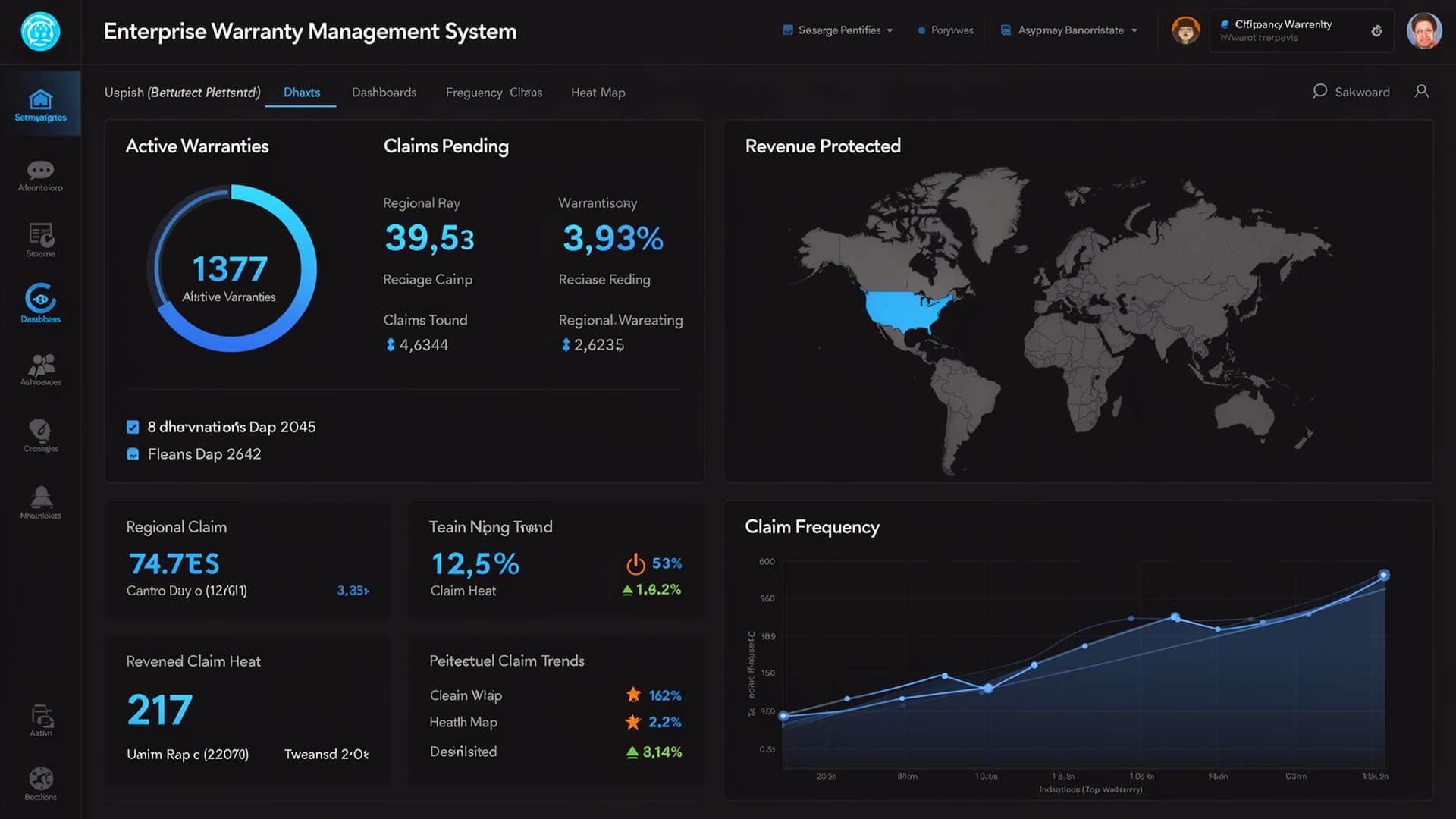
End-to-end warranty lifecycle management platform with centralized dashboards, automated pro-rata invoicing, and real-time analytics, reducing processing time by 40% with 99.9% billing accuracy.
Full cane-to-cash ERP implementation on Odoo, covering farmer slip management, weighbridge integration, sales, purchase, and dispatch for a sugar manufacturer. Live in production.

A multi-platform OTT streaming platform that took a satellite television service beyond the set-top box: 100+ live channels, movies and sports across iOS, Android, web and connected TV, with AirPlay and Chromecast casting and a central admin platform for locations, packages and subscriptions.

We start by understanding the business goal, then put the scope and the price in writing before anyone opens an editor. From there it is a dedicated team, tailored solutions and quality gates you can inspect, so the engagement holds up past the first sprint.
We start by getting clear on the objectives, the constraints and the specific IT requirements. That means talking to the people doing the work today, not only the person who signs the contract.
You receive a written proposal covering scope, team shape, timeline and price. Anything we are unsure about is listed as an assumption rather than buried.
Terms, IP ownership, security obligations and exit conditions agreed openly. You own the code from the first commit, and that is in writing.
We match engineers to your stack and domain rather than assigning whoever is free. You meet the people before they start and keep the same team throughout.
The delivery approach is shaped around how you already work: your repositories, your review process, your release cadence. We adapt to you, not the other way round.
Automated tests, peer review on every merge and dependency scanning in CI. Quality is a gate in the pipeline rather than a phase at the end.
Access scoped per engineer, secrets in a managed vault, and code and credentials kept in your own accounts wherever you prefer. We work under your DPA and security policy.
Regular reviews of velocity, defects and cost, with the findings acted on. The engagement should be measurably better in month six than in month one.
Three ways teams start with us. Most begin with one and add the others as the engagement proves itself.
Strategy, architecture review and a roadmap you can fund, before anyone writes code.
Know More Software Development OutsourcingEnd-to-end delivery of web, mobile and platform work against a fixed scope and price.
Know More Dedicated Development TeamA squad in your tools and your stand-ups, sized up or down as the roadmap moves.
Know MoreWhen the work is real but the hire is not justified yet, when a deadline needs more hands than you can recruit for in time, or when a project needs a skill your team does not carry day to day. Outsourcing is also the honest answer when an internal team is spending its best hours on maintenance instead of the roadmap.
Lower fixed cost, faster access to specialists, and a delivery team you can size up or down without a redundancy conversation. The one that matters most in practice is speed: work starts in days rather than after a three-month hiring cycle.
It depends on scope and engagement model. A dedicated engineer on a monthly retainer is priced per seat; a fixed-scope project is quoted as one number after discovery. Either way you get the figure in writing before work starts, with no open-ended billing.
Broadly four: staff augmentation, where our engineers join your team; dedicated teams, where we run a squad against your roadmap; project outsourcing, where we own delivery end to end; and managed services, where we operate and support what is already live.
An NDA before discovery, access scoped to what each engineer actually needs, code and credentials kept in your own repositories and cloud accounts where you prefer, and secrets never stored outside a managed vault. We can work under your DPA and security policy.
Yes, and most engagements start that way. We pick up an existing codebase, work in your repositories, join your stand-ups and follow your review process. The goal is engineers who behave like part of your team, not a vendor lobbing work over a wall.
A single engineer typically starts within one to two weeks. A full squad usually takes two to three, since we match people to the stack and domain rather than assigning whoever is free.
You do, in full. Code, documentation, designs and infrastructure definitions are yours from the first commit, and they live in your repositories. We hand over runbooks so your team can operate everything without us.
What we have learned running delivery for other people's roadmaps, written without the sales gloss.
When outsourcing beats hiring, and how to structure the first engagement.
The questions worth asking before you sign, and the answers that should worry you.
When outsourcing helps a startup scale, and how to do it safely
What a disciplined delivery process actually looks like, stage by stage.
One call gives you a shortlist of what is worth handing over, the engagement model that fits, and a realistic budget range. No pitch deck, no obligation.
Keep exploring
Related services