Short answer: in 2026 most mobile app development projects fall into three bands.
- Focused MVP (one core user flow): $15,000 to $40,000, 8 to 12 weeks.
- Full product (accounts, payments, admin panel, integrations): $40,000 to $100,000, 3 to 6 months.
- Enterprise or regulated platform (real-time, AI, compliance): from $100,000, 6 to 12 months.
Cross-platform builds in Flutter or React Native usually cost less than two native apps. Plan roughly 15 to 20 percent of the build cost per year for maintenance. See our mobile app development services for a fixed-price quote.
How much does mobile app development cost in 2026?
Mobile app development costs US$15,000 to US$250,000+ in 2026, in four planning bands. Match your launch scope to a band to get a starting budget and timeline.
| Product scope | Planning build budget (USD) | Planning timeline |
|---|---|---|
| Simple app / focused MVP | US$15,000–US$40,000 | 8–12 weeks |
| Moderate / connected business app | US$40,000–US$100,000 | 3–6 months |
| Complex multi-role platform | US$100,000–US$250,000 | 6–12 months |
| Enterprise program | US$250,000+ | 9–18 months |
These are Appther’s planning ranges for a custom app, its backend, and a scoped admin interface. They are not industry averages, and the timelines assume overlapping workstreams and prompt client feedback.
Not included: taxes, paid licenses, external audits, hardware, content, marketing, hosting, and post-launch support. Estimate these separately.
A narrow internal tool or template-based app can cost less. Heavy data migration, specialized hardware, extensive offline use, or strict availability targets can push a project above its band.
What does each budget include?
Focused MVP (US$15,000–US$40,000): One main customer journey, a small number of roles, essential account functions, simple records or bookings, notifications, and basic administration.
Connected business app (US$40,000–US$100,000): Several workflows, payments or subscriptions, operational reporting, richer administration, and integrations with existing business systems.
Complex platform (US$100,000–US$250,000): Multiple user groups, live interactions, marketplace operations, advanced permissions, substantial integration work, and heavier reliability testing.
Enterprise program (US$250,000+): Multiple departments or business units, legacy migration, complex identity and access management, audit requirements, and a coordinated rollout across systems.
A category name cannot set the price. A retail catalog and a multi-vendor marketplace are both “e-commerce,” but they are very different systems.
How do you calculate the cost to build an app?
App development cost is estimated hours multiplied by an hourly rate, summed across each workstream. Appther quotes a fixed price against a written scope, but that fixed price is built from the same arithmetic.
Build cost = each workstream’s estimated hours × its agreed rate, added together
With one blended rate, the formula is simpler: US$40/hour × 1,000 hours = US$40,000.
Then add what the build figure leaves out:
Launch budget = build cost + one-time external costs + contingency
Keep ongoing operating costs in a separate line, so you can see the cash needed after release.
Example: a service-booking app
A first release with an iOS and Android customer app, appointment booking, payments, notifications, a backend, and a web admin panel. It assumes a shared mobile codebase, one payment provider, one language, no separate provider app, and no legacy migration.
| Workstream | Example hours | Cost at US$40/hour |
|---|---|---|
| Discovery and requirements | 60 | US$2,400 |
| UX, UI, and prototype | 100 | US$4,000 |
| Mobile app development | 300 | US$12,000 |
| Backend and APIs | 200 | US$8,000 |
| Web administration panel | 100 | US$4,000 |
| QA and release validation | 140 | US$5,600 |
| Delivery management and release coordination | 100 | US$4,000 |
| Total | 1,000 | US$40,000 |
A 15% contingency brings the build allowance to US$46,000, before external fees, taxes, and running costs. Size the contingency to your open questions: unresolved scope and untested integrations justify more.
The hours and rate here are illustrative. Your quote will use the scope you agree.
How much does the hourly rate change the estimate?
For the same 1,000 hours:
| Blended rate | Build cost |
|---|---|
| US$30/hour | US$30,000 |
| US$40/hour | US$40,000 |
| US$75/hour | US$75,000 |
| US$100/hour | US$100,000 |
A lower rate does not guarantee a lower bill. Total hours, rework, communication overhead, and the quality of what is delivered decide the final cost.
What factors affect mobile app development cost?
Seven factors move an app budget most: user roles, backend and admin tools, design, integrations, offline and real-time behavior, security, and expected load.
1. User roles and business rules
A customer app becomes a larger product once you add service providers, supervisors, finance teams, or administrators. Each role needs its own permissions, screens, notifications, and approvals.
In a booking app, the happy path is simple: choose a slot and pay. The real work is cancellations, refunds, rescheduling, unavailable slots, duplicate payments, and reminders across time zones.
Write these rules down before you ask for a fixed quote.
2. Backend and administration tools
The mobile interface is one part of the product. Your team also has to manage users, update content, process refunds, export reports, and resolve support requests.
A good estimate names the backend services and admin tools needed to run the business. If it does not, they return later as change requests.
3. UX, design, and accessibility
Custom design is more than polished screens. It covers navigation, form behavior, loading and empty states, error recovery, and interaction patterns.
Build accessibility in from the start: readable text, contrast, screen-reader labels, and usable touch targets. Retrofitting it touches every screen. See Appther’s UI/UX design services.
4. Integrations and data migration
A documented, well-supported API is quick to connect. A legacy system with thin documentation or inconsistent data is not.
Before estimating an integration, confirm API access, sandbox availability, authentication, usage limits, data ownership, and who fixes issues on the other side. Add migration work if existing customers, transactions, or content must move across.
5. Offline behavior and real-time features
Offline support needs decisions on local storage, sync, retries, and conflicting edits. Real-time features add questions about connections, message ordering, live status, and recovery after a dropped network.
Turn “works offline” and “updates instantly” into testable requirements with clear limits.
6. Security, privacy, and assurance
Sensitive workflows need tighter access controls, secure data handling, audit records, retention settings, and sometimes specialist review.
Define the data involved, where users are located, and the assurance work required before estimating. Ask for verifiable deliverables, such as a named standard or a penetration test report.
7. Expected usage and reliability
Registered users alone do not size infrastructure. Concurrent sessions, transaction frequency, media storage, video delivery, peak traffic, and recovery targets do.
A text-based task app and a video platform can have the same user count and very different running costs.
Which features increase an app’s budget?
Payments, messaging, location, AI, and media add the most work, and each has a small version and a large one. Use this table to turn feature labels into scope questions.
| Feature | A smaller first scope | What adds work |
|---|---|---|
| Account access | Email login and password reset | Multiple identity providers, enterprise SSO, account recovery rules |
| Payments | One provider and a simple checkout | Subscriptions, seller payouts, refunds, reconciliation |
| Messaging | Basic user conversations | Attachments, moderation, search, delivery status, abuse controls |
| Location | Address entry and map display | Background tracking, geofencing, route logic |
| Notifications | A few transactional alerts | Preference controls, segmentation, scheduling, multiple channels |
| Reporting | Standard operational summaries | Custom dashboards, exports, granular access restrictions |
| AI assistant | One narrow, defined task | Retrieval, tool actions, evaluation, human review, sensitive data |
| Media | Image uploads | Live streaming, transcoding, moderation, playback entitlements |
These features share infrastructure and affect one another. Pricing each row as an independent add-on gives a misleading total.
Native vs. cross-platform: which costs less?
Cross-platform development usually costs less when iOS and Android share most workflows, because one mobile codebase serves both. Native is the better fit when platform-specific behavior or device capabilities dominate the product.
| Approach | Where it fits | Budget considerations |
|---|---|---|
| Native iOS and Android | Products with extensive platform-specific functionality | Two mobile implementations; backend and design work can still be shared |
| Cross-platform (Flutter, React Native) | Business apps with largely shared journeys | One mobile codebase; both platforms still need testing, releases, and some native work |
| No-code or low-code | Prototypes and simple, compatible workflows | Subscription fees, platform limits, integration constraints, and a possible migration later |
The saving varies by project. Backend complexity, custom device integrations, and quality requirements cost the same whichever mobile framework you choose.
For a deeper comparison, read React Native vs Flutter and iOS vs Android vs cross-platform: which to build first.
How much does app development cost by category?
Most app categories start at US$35,000–US$45,000 for a defined first release and reach US$100,000–US$235,000+ for a full platform. The ranges are wide because projects in one category differ more than the categories do.
| App category | Illustrative build budget (USD) | Scope questions to settle first |
|---|---|---|
| E-commerce / m-commerce | US$35,000–US$100,000 | Who owns inventory, orders, returns, promotions, and payment reconciliation? |
| On-demand services | US$35,000–US$135,000 | How are providers assigned, bookings changed, availability managed, and disputes handled? |
| Social / community | US$35,000–US$200,000 | How are content, reports, blocking, moderation, and user safety managed? |
| Dating | US$35,000–US$235,000 | How are profiles verified, matches generated, and reports and blocking handled? |
| Education / learning | US$40,000–US$150,000 | Who creates content, tracks progress, manages access, and supports learners? |
| Gaming with scoped AR / 3D features | US$40,000–US$170,000+ | Which devices must it run on, how much 3D content is custom, and is multiplayer required? |
| Healthcare / healthtech | US$40,000–US$200,000+ | What data is collected, who can access it, and what review or integration is required? |
| Financial products / fintech | US$45,000–US$235,000+ | Which financial functions are offered, which partners are involved, and what controls need specialist assessment? |
These are illustrative planning figures for scoped first releases and platforms, not surveyed market averages. Specialist requirements or a large enterprise rollout can exceed them.
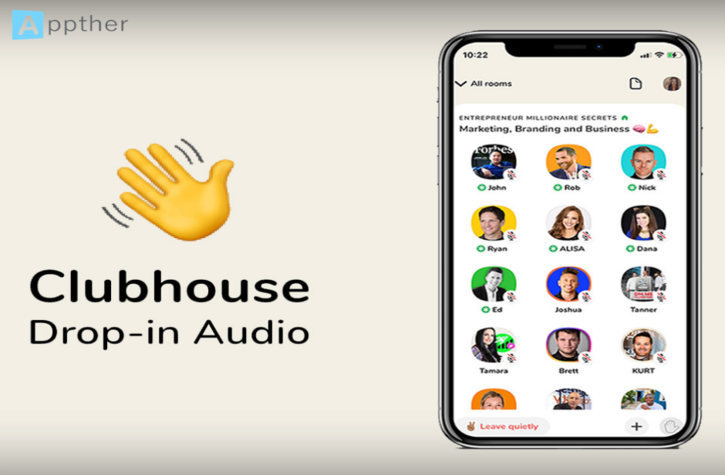
Use a familiar app to explain a user journey, then define your own first release. Validating one core workflow is a different project from recreating a mature global platform.
How much does it cost to add AI to an app?
The cost of an AI feature depends on the task, the data, how it is evaluated, and how often it runs. A text-assistance feature on an existing model API is a small scope. Custom model training, or an assistant that takes actions in business systems, is a large one.
An AI estimate should cover:
- Data preparation and permission-aware access.
- Prompt, retrieval, and workflow development.
- Evaluation against representative examples.
- Failure handling, monitoring, and human review where needed.
- Model usage, storage, and supporting service charges.
Estimate running costs from expected requests and workload, not registered users. AI-assisted coding can speed up some delivery tasks, but architecture, testing, and release validation still need budget.
For conversational features, see Appther’s AI chatbot development cost guide and AI development services.
What costs should you plan for after development?
After launch you pay for store accounts, hosting, third-party services, maintenance, customer operations, and growth. Keep these in an operating budget, separate from the build.
| Cost item | How to budget for it |
|---|---|
| Apple Developer Program | US$99 per membership year, or local currency where available |
| Google Play Console | US$25 one-time registration fee |
| Hosting and databases | Model compute, storage, backups, traffic, and separate staging and production environments |
| Third-party services | Estimate payments, SMS, maps, email, video, analytics, and AI usage individually |
| Maintenance | From US$50/month; scope and response times depend on the plan |
| Customer operations | Support, moderation, onboarding, and content management, as applicable |
| Growth | A separate budget for acquisition, creative assets, and app store optimization |
Account fees are from the Apple Developer Program and Google Play Console pages, checked October 7, 2026. They are separate from store commissions and payment transaction fees.
How much does app maintenance cost?
Appther maintenance starts from US$50/month. The price for your app depends on the plan, the work included, and the response times you need.
An app that needs a larger monthly allocation costs more. For example, 20 hours a month at US$40/hour is US$800/month, or US$9,600 a year.
Check that the agreement names what is covered: defect investigation, dependency updates, OS compatibility checks, monitoring, and small improvements. Hosting, major features, and round-the-clock incident response should be explicitly in or out.
Every Appther build also carries a 90-day bug-fix warranty from final delivery and sign-off, covering reproducible defects against the agreed specification. Details are in the terms of service.
Example: budget through the first 12 months after launch
Using the service-booking app from earlier:
| Budget component | Illustrative allowance |
|---|---|
| Initial build | US$40,000 |
| Build contingency (15%) | US$6,000 |
| Maintenance: US$800 × 12 months | US$9,600 |
| Hosting and services: assumed US$500 × 12 months | US$6,000 |
| First-year Apple membership and Google registration | US$124 |
| Combined planning allowance | US$61,724 |
The total covers the build plus 12 months of operation after launch. Replace the US$500 hosting assumption with a usage-based estimate. Marketing, taxes, payment transaction charges, support staff, legal work, and external reviews are excluded.
How long does it take to build a mobile app?
A simple MVP takes about 8–12 weeks, a moderate app 3–6 months, a complex platform 6–12 months, and an enterprise program 9–18 months.
An 8–12 week MVP at Appther typically runs in overlapping phases:
| Phase | Typical weeks | What happens |
|---|---|---|
| Discovery | Week 1 | Features scoped, platform chosen, success metrics and fixed quote agreed |
| UX and design | Weeks 1–3 | Wireframes and a clickable prototype |
| Development | Weeks 3–10 | Two-week sprints, each ending in a demo |
| QA and testing | Weeks 8–11 | Automated and manual testing across devices, plus a beta release |
| Launch | From week 11 | App Store and Google Play submission, then monitoring |
Larger scopes take longer. Appther shipped the Ideal TV streaming platform, with iOS, Android, web, and connected-TV apps plus an admin platform, in 22 weeks from kickoff to launch.
Team hours are not calendar time. Design, mobile, and backend work overlap, while some integrations wait on access or approvals.
Agree who supplies content, branding, test data, store accounts, and acceptance feedback. Missing inputs delay a release even when engineering is on schedule.
How can you reduce app development cost without weakening the product?
Cut scope and uncertainty, not quality. Seven ways to do it:
- Prioritize one valuable outcome. Choose the main job the first release must help users complete.
- Validate the journey with a prototype. Resolve navigation and workflow questions before code is written.
- Limit launch variations. Add regions, languages, roles, and complex subscription tiers when the business case supports them.
- Evaluate established services. Compare integration cost, recurring fees, control, and migration options before building everything yourself.
- Resolve risky dependencies early. Test unfamiliar APIs or device connections before committing to a fixed plan.
- Define acceptance criteria. Make “done” measurable, and agree how changes affect cost and schedule.
- Keep essential quality work. Security controls, testing, recovery behavior, and usable admin tools are what make a launch reliable.
A useful MVP is the smallest coherent product that tests your business assumptions with real users. For the planning mistakes that cost founders most, read why mobile app startups fail.
What should an app development quote include?
A quote should state exactly what is delivered, what is excluded, and who owns the result. Before comparing proposals, ask each supplier to document:
- Included platforms, user roles, workflows, and administration features.
- Backend, integration, and migration responsibilities.
- Design deliverables, supported devices, and testing coverage.
- Security, accessibility, and performance requirements.
- Milestones, client dependencies, and acceptance criteria.
- Change-request rules and payment milestones.
- Source-code ownership, repository access, account ownership, and handover.
- External fees, exclusions, warranty terms, and post-launch support.
A fixed price works best when deliverables are well defined. A phased or time-and-materials engagement suits unresolved requirements, provided you have budget visibility and regular scope reviews.
Plan your mobile app budget with Appther
Appther gives you a fixed-price quote against a written scope, so the budget is known before development starts. Our mobile app development services cover design, iOS, Android, and cross-platform apps, backend, launch, and maintenance.
How an engagement works:
- Free 30-minute strategy call. We talk through your users, main workflow, platforms, existing systems, and target launch window.
- Free build plan within 48 hours. Features, platform choice, timeline, and a fixed budget.
- Milestone payments. A 10% advance to start, with the balance tied to milestones.
- Visible progress. Two-week sprints, each ending in a demo.
- You own the work. Source code, design assets, and documentation transfer to you once the payments due under the SOW are received. We sign an NDA before discovery if you need one.
See what we have shipped in our case studies.
Build your mobile app with a clear plan
Bring your idea, your must-have features, and a budget range. Leave with a scope you can price.
Discuss Your Mobile App Project >
Frequently asked questions
How much does it cost to build an app in 2026?
Between US$15,000 and US$250,000+. A simple MVP costs US$15,000–US$40,000, a moderate app US$40,000–US$100,000, and a complex platform US$100,000–US$250,000. Enterprise programs start at US$250,000. The final figure depends on scope, integrations, and delivery requirements.
How much does a basic app or MVP cost?
A basic app or MVP costs US$15,000–US$40,000 and takes 8–12 weeks. That covers one main user journey, essential account functions, notifications, and basic administration.
How long does it take to build an app?
About 8–12 weeks for a simple MVP, 3–6 months for a moderate app, 6–12 months for a complex platform, and 9–18 months for an enterprise program. Client feedback speed and third-party access affect the calendar as much as engineering does.
How is app development cost calculated?
Multiply estimated delivery hours by the agreed hourly rate. For example, US$40/hour × 1,000 hours = US$40,000. Then add external fees, a contingency, and a separate budget for running the app.
Is an Android app cheaper to develop than an iOS app?
Not reliably. For the same scope, the two usually cost about the same. Device coverage and platform-specific features can raise the effort on either side.
Is Flutter or React Native cheaper than native development?
Usually, when both platforms share most workflows, because one codebase replaces two. Testing on both platforms, native integrations, backend work, and maintenance still need budget.
Does an app estimate include the admin panel?
Only if the proposal says so. Ask which tasks staff can perform, which roles are supported, and whether reporting, refunds, content updates, and support workflows are covered.
How much should I budget for app maintenance?
Appther maintenance starts from US$50/month, and the price rises with included work and response times. Confirm whether hosting, third-party services, and feature updates are part of your plan.
How much are the app store account fees?
Apple Developer Program membership is US$99 per year. Google Play Console has a US$25 one-time registration fee. Both are separate from development, maintenance, and store commissions.
Can I get a fixed app development price?
Yes. Appther quotes a fixed price once the scope, assumptions, deliverables, and acceptance criteria are written down. Ask any supplier how scope changes, integration uncertainty, and client dependencies are handled before you accept a price.
What information is needed for an accurate estimate?
Your target users, main workflows, platforms, user roles, integrations, design expectations, data migration needs, launch timeline, and budget range. A prioritized feature list or prototype makes the estimate more precise.