To build an app like Clubhouse, you need live audio rooms, listener and speaker permissions, discovery, notifications and moderation. An established audio SDK can provide the media infrastructure, while your application manages the community experience. For planning, a focused MVP can be scoped around US$40,000–US$80,000 and 10–16 weeks; an expanded product may require US$80,000–US$150,000 or more and 4–7 months.
These are indicative development estimates, not fixed quotes. Audience size, platforms, recording, monetisation and operational requirements can materially change the scope.
The more important starting question is why your audience needs a dedicated place to talk. A feature list alone is not a reason for users to return.
What can builders learn from Clubhouse?
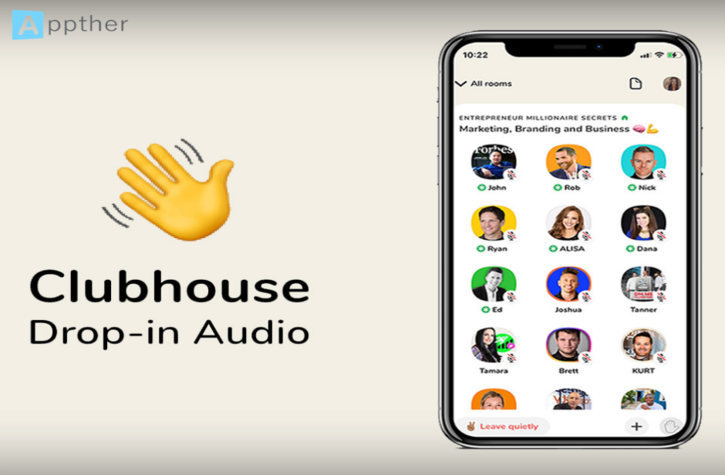
Clubhouse helped popularise live social audio: people could enter rooms, listen to conversations and join a speaker stage. Its early invitation-based experience is documented in the company’s announcement opening access more widely.
In September 2023, Clubhouse introduced Chats, a more asynchronous, voice-based way to stay connected with friends. This historical shift is useful context; it should not be confused with a claim about the product’s entire current feature set.
For a new product, the practical lesson is to validate the community’s behaviour. Test whether users want scheduled live sessions, smaller private conversations, asynchronous voice messages or a combination. Do not assume that copying the original room interface will reproduce its adoption.
Choose the audience before the technology
A live audio feature might support language practice, professional groups, creator communities, coaching or member discussions. These are possible use cases, not evidence that each market needs another standalone app.
Before development, answer four questions:
- Who will host the first sessions?
- What will make people attend repeatedly?
- What advantage does your product offer over tools they already use?
- Who will handle moderation and customer support?
Validate the format with a small group and an existing tool where practical. Their behaviour can help define the first release.
Core features of a Clubhouse-style MVP
Listener experience
Provide account creation, a basic profile and a clear way to find relevant rooms. Listeners should be able to join, see who is speaking, request a turn and leave easily.
Include notification preferences and explain microphone access when someone chooses to speak. Reporting and blocking should be accessible from the room experience, not hidden deep in settings.
Host and speaker experience
Hosts need to create rooms, set their visibility and manage the stage. A useful first release supports speaker invitations, hand-raise requests, muting, removal and ending a session.
Co-host permissions should be explicit. Promoting a listener must not silently activate their microphone: the user should understand the role change and control when they speak.
Administration and support
An admin panel should cover user and room management, reports, moderation decisions and basic operational analytics. Staff need a way to investigate incidents and suspend access where appropriate.
Keep an audit trail of moderation actions with an agreed retention policy. Define what evidence is available when a live conversation has not been recorded.
What belongs in a later release?
| Essential first-release scope | Add when justified by user needs |
|---|---|
| Accounts and basic profiles | Detailed creator profiles and recommendations |
| Room discovery and joining | Community pages and advanced scheduling |
| Listener, speaker and host roles | More granular community roles |
| Report, block and host controls | Assisted moderation and richer review workflows |
| Basic notifications and analytics | Recordings, transcripts and summaries |
| Reliable audio and reconnection | Tickets, subscriptions and creator payouts |
Move a feature into the MVP when it is necessary for the target audience. For example, scheduled sessions may be essential for a coaching community even if they are optional elsewhere.
How the live audio technology works
Separate two responsibilities: transmitting audio and managing the application. The media provider handles its supported audio transport functions; your backend controls accounts, access, discovery, moderation and business rules.
| Layer | Practical starting point | Decision to validate |
|---|---|---|
| Mobile clients | Flutter, React Native or native development | SDK support, background behaviour and device compatibility |
| Audio transport | Agora, LiveKit or 100ms | Roles, regions, limits, quality and operating cost |
| Backend and database | Node.js or Go with PostgreSQL | Authorisation, room lifecycle and durable records |
| Presence and room events | Provider events or application messaging | Reconnection, stale state and event ordering |
| Notifications | Platform push services | Preferences, reminders and deep links |
| Optional media processing | Recording, storage and transcription services | Access, retention, cost and deletion |
These are architecture options rather than a mandatory stack. You may not need a separate WebSocket service if the provider’s supported events meet the application’s needs.
For concrete implementation references, 100ms documents speaker and listener role changes, while Agora’s documentation illustrates broadcaster and audience roles. Verify the documentation for your selected mobile SDK before committing.
Enforce permissions on the server
Do not rely only on hiding a microphone button. Issue room access with the appropriate publishing permissions and validate role changes through trusted backend logic.
LiveKit’s token documentation explains room and participant permissions. Plan for token expiry, removal and re-entry controls, and ensure your application does not issue fresh access to a banned participant.
Managed service or self-hosted deployment?
A managed service can reduce infrastructure work. Self-hosting can offer more deployment control, but your team takes responsibility for capacity, networking, monitoring and recovery.
LiveKit supports both its managed cloud and self-hosted deployment. It is therefore inaccurate to describe every LiveKit implementation as a managed service.
Neither approach guarantees a fixed room capacity or flawless audio. Validate your intended number of speakers, listeners and concurrent rooms under realistic conditions.
Moderation and recording need product decisions
Give hosts immediate controls
Provide visible room rules, reports, blocking, muting and removal. Define who reviews reports, how urgent incidents are escalated and how decisions can be challenged.
Apple’s App Review Guidelines require controls for user-generated content, including reporting, blocking, filtering objectionable material and reachable support. Store requirements should inform the product scope before submission.
Treat automated moderation as assistance
Transcription and classification may help surface material for review. They can also miss context or misinterpret accents, overlapping speech and multilingual conversations.
Use automation with human oversight and tested escalation rules. Do not promise that AI will prevent every harmful interaction or make moderation staffing unnecessary.
Make recording optional and visible
Not every conversation should become a replay. Define who can start recording, how participants are informed, who can access it and when it is deleted. Include late joiners in the recording notice and consent flow.
Apple’s recording guideline, section 2.5.14, calls for explicit consent and a clear recording indication. Product decisions must also account for the markets and communities you serve.
Transcripts and AI summaries should follow the same access and retention decisions as the underlying content. Review how recording and processing interact with your privacy and encryption design before promising confidentiality features.
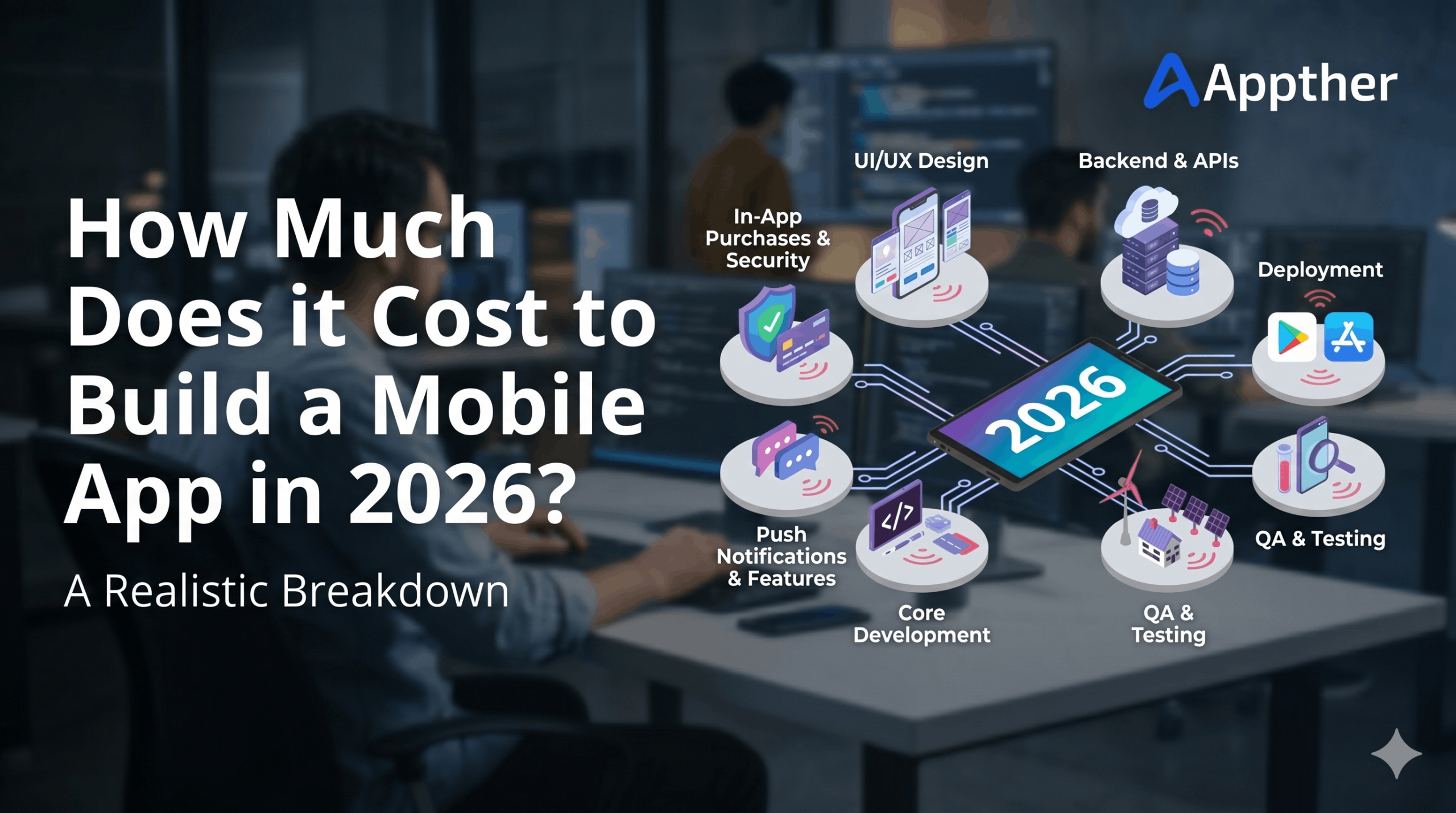
How much does it cost to build an app like Clubhouse?
For an Appther project discussion, the following USD planning ranges reflect the scope in this guide:
| Scope | Indicative budget | Indicative timeline |
|---|---|---|
| Focused live audio MVP: accounts, rooms, roles, discovery, notifications and essential moderation | $40,000–$80,000 | 10–16 weeks |
| Expanded community product: scheduling, community features, recording, analytics and selected monetisation | $80,000–$150,000+ | 4–7 months |
The MVP estimate assumes a supported audio SDK, limited integrations and a tightly defined initial audience and feature set. Confirm whether discovery and design are included and when the delivery period starts. Store review and external dependencies can affect launch timing.
Large rooms, extensive native integrations, multilingual processing, sophisticated payouts or complex moderation operations require separate estimation. An expanded product is not a guarantee of unlimited scale.
These live audio ranges sit above the simplest app MVP tier because real-time permissions, device behaviour and moderation add work. See Appther’s mobile app development cost guide for wider cost drivers.
Estimate running costs before launch
Consider audio usage, backend hosting, recording, storage, transcription, notifications, support and moderation. Software maintenance should be estimated against the release plan and support expectations rather than assumed to be a fixed percentage of build cost.
A useful workload estimate is:
Participant-minutes = total time connected across all participants.
For example, 100 people connected for 30 minutes represent 3,000 participant-minutes. Repeating that session 20 times represents 60,000 participant-minutes.
This is a usage example, not a provider quote. Vendors may meter services differently or charge separately for recording, bandwidth, transcription and other features. Apply the selected provider’s current billing rules to your actual scenario.
Also estimate peak concurrency. Monthly usage and the busiest simultaneous audience answer different capacity questions.
How can a live audio app make money?
Possible models include paid community membership, event access, creator support and sponsored sessions. These are options for your proposed app, not claims about Clubhouse’s current revenue streams.
Validate willingness to pay before building complex monetisation. Plan entitlement checks, cancellations, refunds and creator settlement where relevant. Payment implementation needs to reflect the current store rules for the content, market and distribution method.
Measure contribution after audio usage, processing, support, moderation and creator shares. A large audience is not automatically a profitable audience.
Test the experience before expanding
Run a pilot with representative devices and real hosts. Test joining, leaving, role changes, report handling and recovery after a lost connection. Include headset changes, incoming calls, locked screens and transitions between Wi-Fi and mobile data.
Track both technical and community outcomes: join failures, reconnects, repeat listeners, returning hosts, useful participation and report response times.
Recordings and summaries can extend useful content where appropriate, but they should follow the community’s expectations. Retention needs to be demonstrated through actual return behaviour.
Frequently asked questions
How much does a Clubhouse-style MVP cost?
The planning range in this guide is US$40,000–US$80,000 for a tightly scoped live audio MVP. An expanded product may require US$80,000–US$150,000 or more. Audio usage and operating services are separate unless included in the proposal.
How long does development take?
A focused MVP can be scoped around 10–16 weeks, while the expanded scope may take 4–7 months. Confirm discovery, platform coverage, testing and integration assumptions before treating these as a delivery commitment.
Do I need to build the audio engine myself?
Usually, an established audio SDK is a sensible starting point. Compare its supported mobile platforms, permissions, recording options, pricing and deployment model. You still need application logic and real-device testing.
Can AI handle all live audio moderation?
Do not plan on that assumption. Automated tools can assist review, but context, latency and recognition errors require host controls and human escalation.
Is a live audio app worth building in 2026?
It can be worth testing when a defined audience has a recurring reason to gather and the experience improves on available alternatives. Validate attendance, repeat use and operating economics before expanding the build.
Build a live audio experience around your community
Appther’s mobile app development services can help turn your audience requirements into a defined product scope, audio architecture and launch plan.
Start with who will host, who will listen and what makes the conversation worth returning to.
Discuss Your Live Audio App Project >
Share your audience, expected room sizes and essential features to discuss an appropriate MVP scope and estimate.