Short Drama App Development: A Microdrama Streaming Platform

A mobile viewing experience for discovering short dramas, watching episodes in portrait and coming back to an unfinished story, with a publishing panel for the content team behind it. This is how Appther builds one.

iOS & Android, one codebase Publishing panel included Credits, plans or rewarded ads
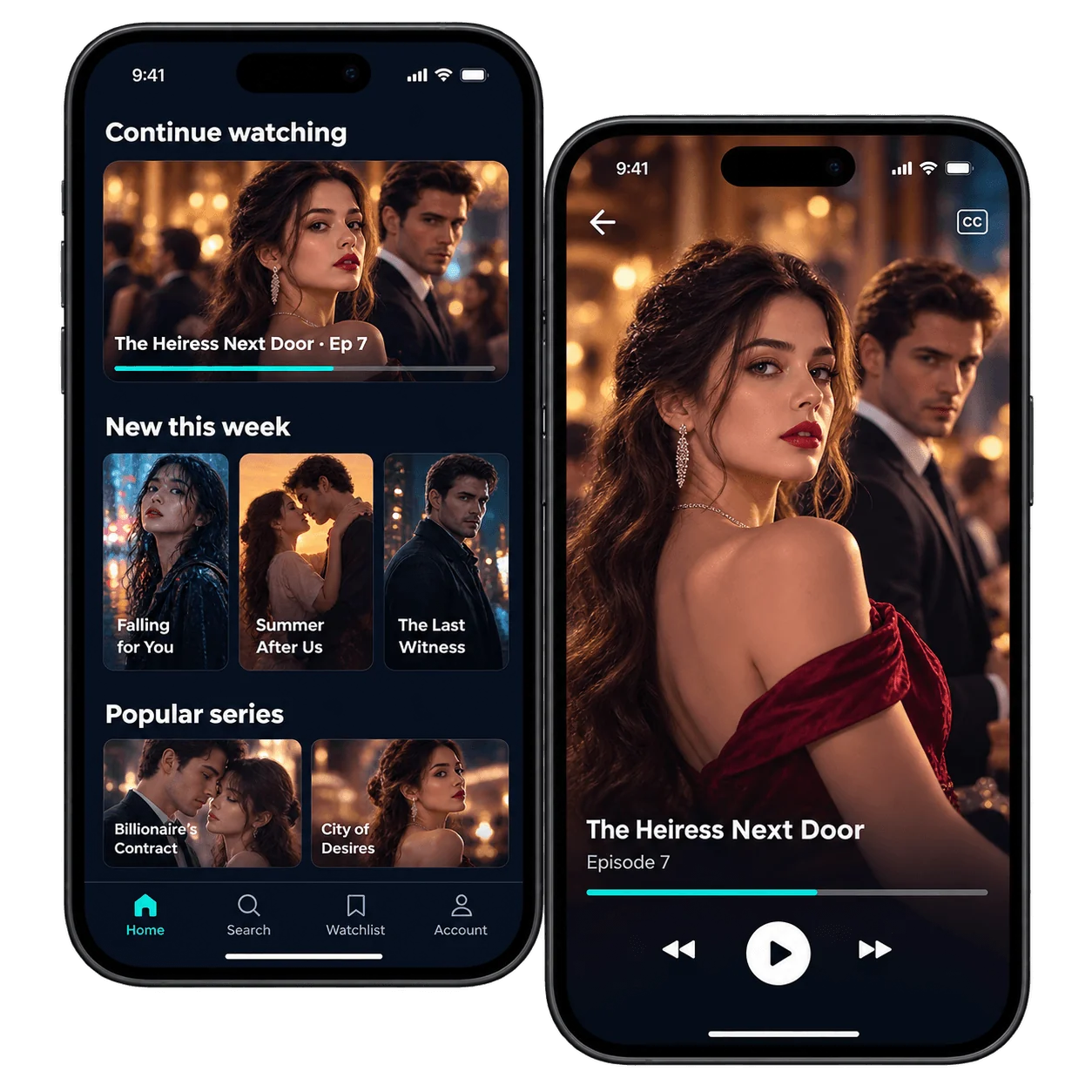
Concept screens of the viewer app: the home screen with continue watching, new series and popular series, beside the portrait player on The Heiress Next Door, episode 7
SOLUTIONShort drama streaming platform
FIRST RELEASEiOS · Android · Web admin
APPTHER'S ROLEDesign · Mobile · Backend · Admin · QA
BUILT FORUS founders, studios and content owners
STATUSSolution showcasenot a client engagement
01 · THE PRODUCT

A mobile platform built around short-form stories
Viewer appDiscoverWatchUnlockResume iOS & Android
One backendCatalogueAccess rightsProgressCredit ledger decides who can watch what
Studio panelUploadOrderCaptionSchedule for the content team
1–2 minper episode, portrait
40–80episodes in a series
1 tapto the next episode

A short drama is a serial told in one- to two-minute portrait episodes, and a platform for it is judged on three things: how fast a viewer finds a story worth starting, how little friction sits between one episode and the next, and whether the app remembers exactly where they left off. Get those wrong and no amount of content saves the retention curve.

The people publishing that content have their own needs. A studio releasing several series a week has to arrange episodes in order, attach artwork and captions, schedule releases and fix a mistake without waiting on a developer. So Appther treats the viewer app and the publishing panel as one product with two audiences, and designs the backend that both of them talk to.

WHAT A FIRST RELEASE HAS TO DOLet a viewer find a series, watch it in portrait with captions, pay for the episodes that need paying for, and resume days later on another device, while the content team publishes without touching code.
02 · THE HARD PARTS

The product problems a short drama app has to solve

None of these are exotic. All of them produce refunds and one-star reviews when they are treated as details.

Episode continuity Sixty short episodes, watched across days and devices, have to stay in order with progress that never drifts. What goes wrong: a viewer reopens the app to the wrong episode and assumes the story is broken.
Playback reliability Portrait video has to start fast on a mid-range phone on mobile data, with captions in sync and no rebuffering between episodes. What goes wrong: a two-second spinner on every episode reads as a slow app, not a slow network.
Paid access that stays in sync A purchase, a credit balance and an unlocked episode are three records that must agree, even when the app closes mid-payment. What goes wrong: "payment successful" on screen, episode still locked, support ticket within the hour.
Publishing without developers Editors need to upload, order, caption, schedule and correct episodes themselves, with a clear view of what is processing and what is live. What goes wrong: every release becomes a ticket, and a mis-set paywall reaches every viewer at once.
03 · THE SOLUTION

One connected experience for viewers and content teams

A React Native app for viewers and a browser-based panel for editors, both reading from the same catalogue and the same access rules. Everything the viewer sees was published, ordered and priced by the content team in the panel.

Viewer app

React Native · iOS & Android
Series discovery, detail pages and a continue-watching row on the home screen Portrait playback with captions, autoplay into the next episode and a swipe to skip Episode lists that show what is free, what costs credits and where you stopped Watchlists and a notification when a followed series releases Sign-in, account recovery and restore purchases on a new phone

Content operations

Web panel · for the publishing team
Series and episode management with drag-to-reorder Upload with processing status: queued, processing, ready or failed Artwork, captions and metadata per episode Release scheduling and availability windows, with access rules set per episode Roles for publishing, support and finance, and an audit trail on every change
What we leave out of a first release, on purpose. Offline downloads, connected-TV apps and a recommendation engine all wait for a second release. Each one adds real cost, and none of them changes whether viewers finish a series. A first release earns the right to build them by proving the catalogue and the access model. Read more about how we scope this kind of build on our mobile app development services page.
04 · VIEWER JOURNEY

From discovering a series to watching the next episode

Four screens carry the whole experience. Everything else in the app exists to get a viewer back into this loop.
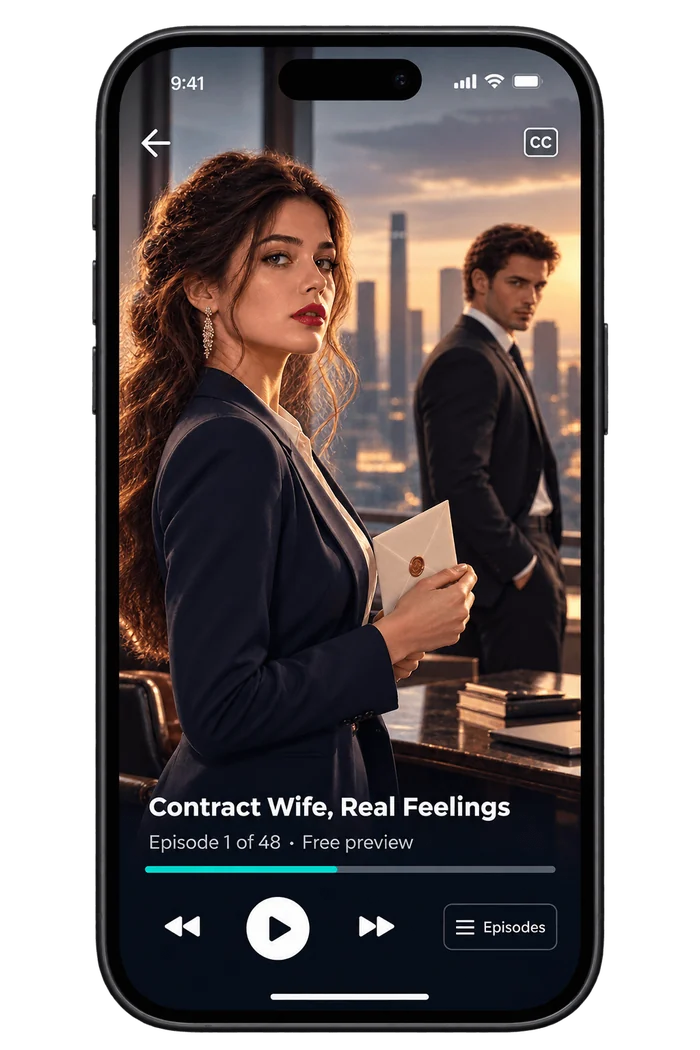
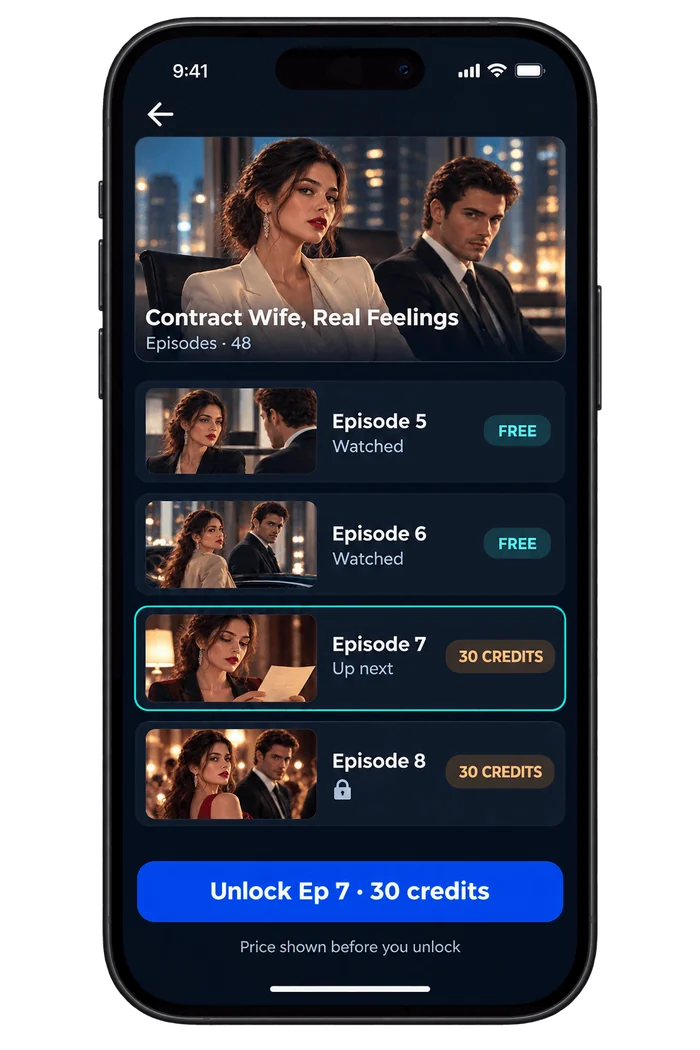
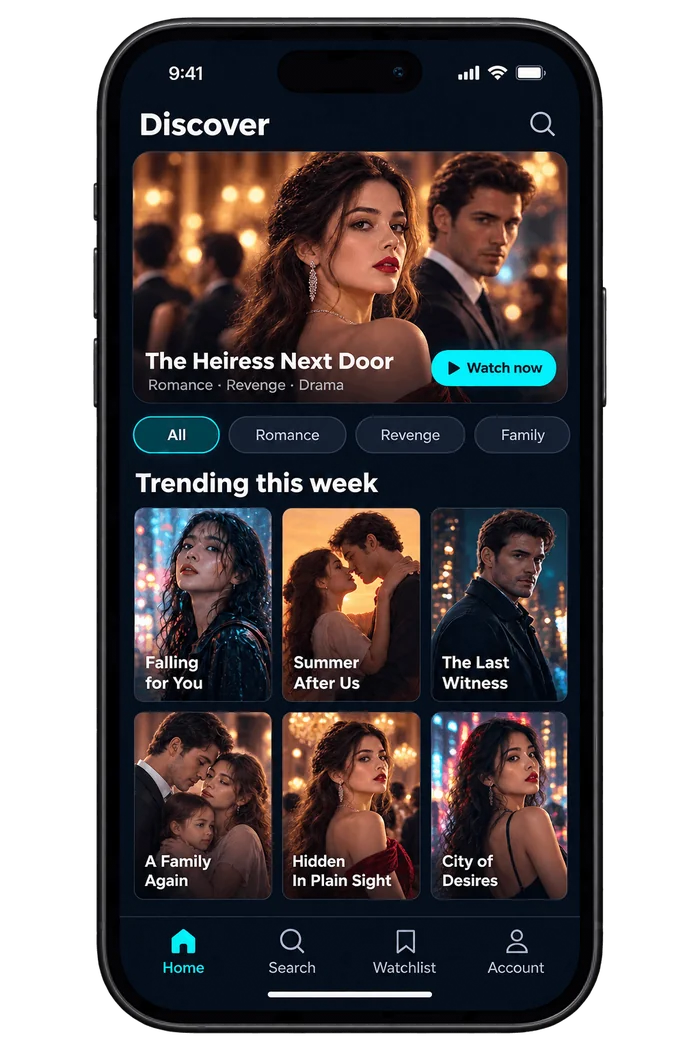
1 Discover screen: a featured series, genre filters and a trending grid
DiscoverGenre rows, a trending shelf and a continue-watching row, so a returning viewer never starts from the search box.
2 Portrait player on Contract Wife, Real Feelings, episode 1 of 48, free preview, with captions and an Episodes button
Start watchingThe series page opens straight into episode one. Portrait player, captions on by default, and the next episode queued before this one ends.
3 Episode list showing watched free episodes, episode 7 up next for 30 credits, and the unlock button with the price shown first
Continue or unlockThe episode list says which episodes are free, what the next one costs and where the viewer stopped. The price is visible before any tap.
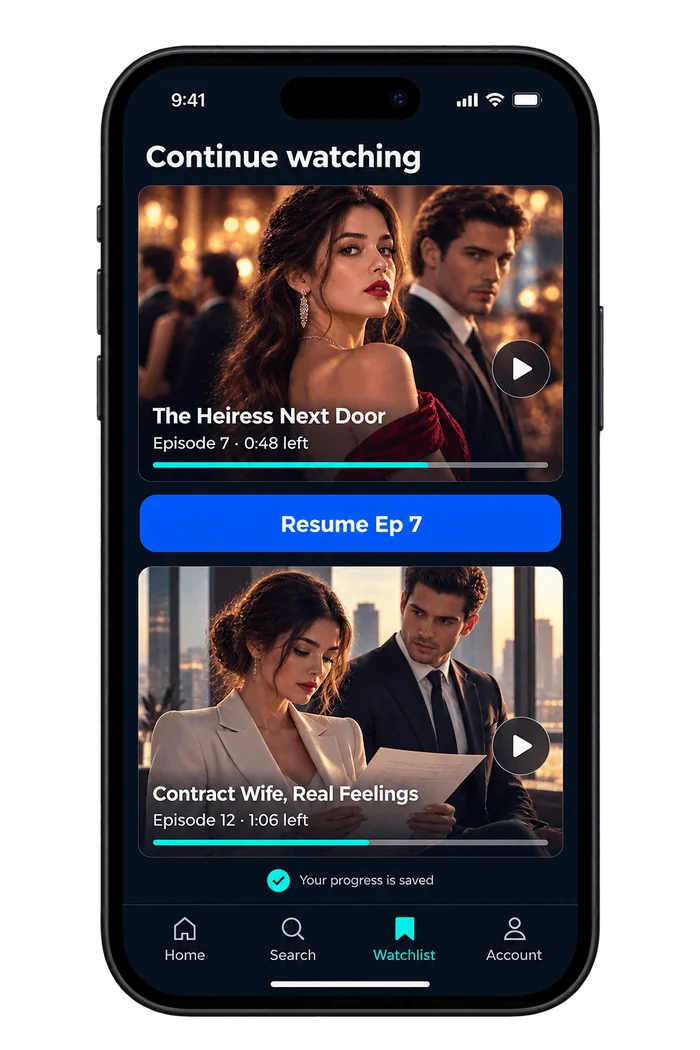
4 Continue watching screen with time left on two series, a resume button and a note that progress is saved
ReturnProgress is saved on the server, so a viewer resumes at the same second on any device, including a new phone after a restore.
DESIGN DECISIONThe episode list stays one tap away from the player, as a sheet that slides up over the video rather than a separate screen.
REASONShort episodes mean viewers change episodes far more often than on a long-form service. Leaving the player to do it breaks the rhythm that makes the format work.
HOW WE CHECK ITIn usability sessions before release, we count the taps between finishing an episode and starting the next, and treat anything above one as a defect.
05 · CONTENT OPERATIONS

Giving the content team control of publishing

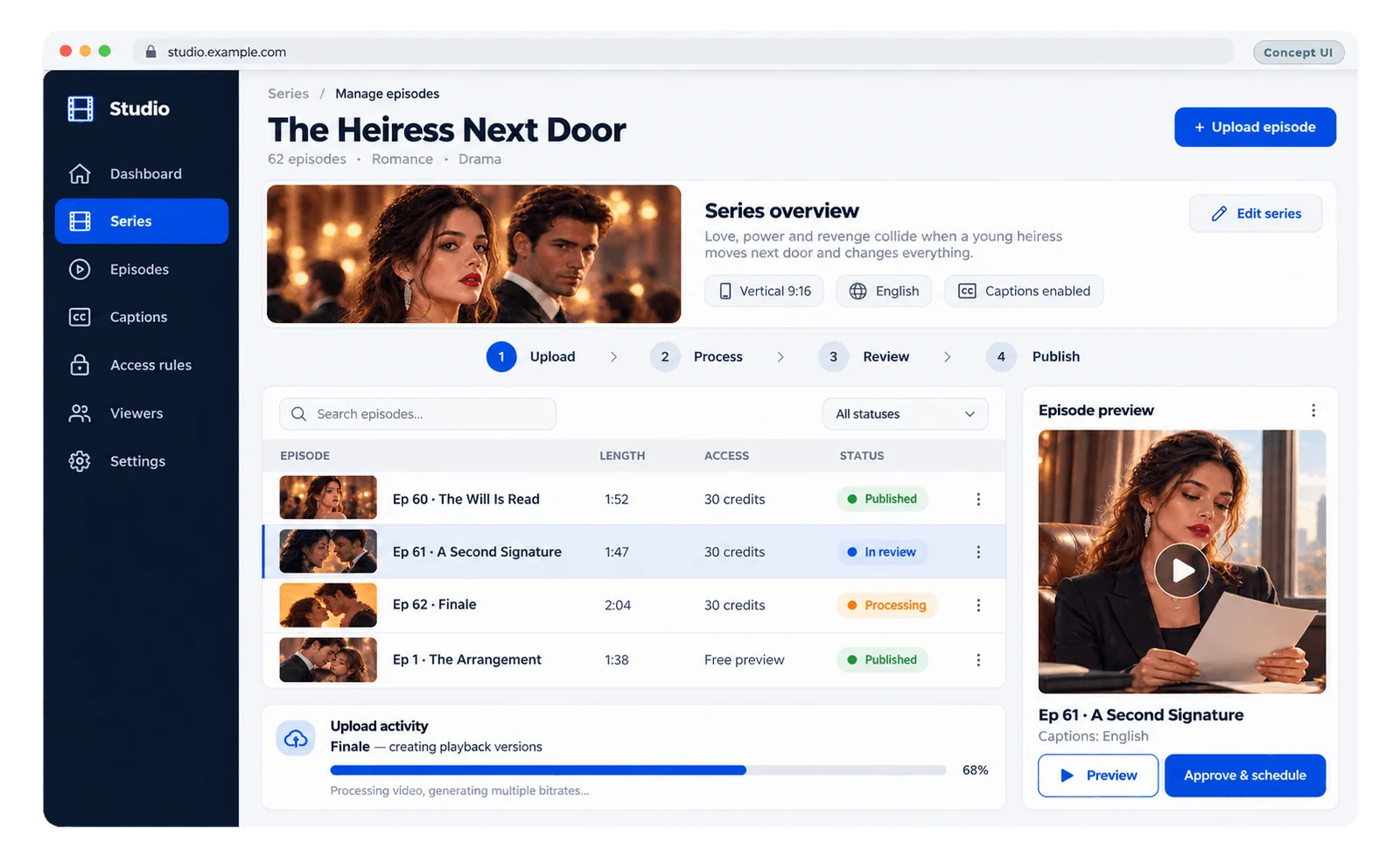
Every episode moves through the same four states, and the panel shows which one it is in. An editor can publish an approved episode without a code deployment, and roll it back the same way.

Upload & processSource video in, streaming renditions out, with the status visible while it happens.
Order & captionDrag episodes into sequence, attach artwork and caption files per language.
Set accessFree preview, credit price or plan-only, per episode, with a preview of what viewers will see.
Schedule & publishRelease windows, territory limits and a review step before anything goes live.
The Studio publishing panel: The Heiress Next Door with its episodes, each showing length, access rule and status, the upload, process, review and publish steps, an upload in progress and an episode preview ready to approve and schedule

The panel is a web application built alongside the app, sharing its backend and its access rules. See how we approach these tools under web development.

06 · MONETISATION & ACCESS

Connecting payments to the right viewing access

We build one of three models, or a deliberate combination, and the choice is made before development because each one changes the app, the backend and the support load.

MODEL AEpisode creditsViewers buy a balance and spend it per episode. Flexible for the viewer, and the most demanding to get right: every purchase, bonus credit and debit lives in a server-side ledger so a balance can always be explained.
MODEL BSubscriptionsA plan unlocks a defined catalogue for a period. Renewals, cancellations, refunds and late billing notifications all change access, so the backend reconciles store events rather than trusting the app.
MODEL CRewarded adsA viewer watches an ad to unlock an episode. The reward is granted only after the ad network confirms it server-side, with a fallback when no ad is available.
The server decides. The app asks whether an episode may play; it never works that out from local state, so a modified device gains nothing.
Nothing charges twice. Repeated store notifications and double-tapped unlocks are recognised and ignored.
Interrupted purchases recover. If the app closes before the confirmation screen, the backend still reconciles the payment and the episode is unlocked on next launch.
The price is shown first. Credits or plan terms appear before the unlock, and promotional credits are labelled separately from purchased ones.
07 · TECHNOLOGY STACK

How an episode gets from an upload to a phone

Two paths, one backend in between. Content is prepared once and served from the edge; every play request still passes through the access check. Hover a component to see what talks to it.

Content path · upload to edge
Studio panelEditors upload and publish
Background jobsQueue, retries, scheduling
Video processingAdaptive renditions + captions
Private storageOriginals never public
CDNSigned, expiring segments
Viewer path · tap to playback
Monitoring watches every hop. Time to first frame, playback failures, purchase errors and publishing failures each have a signal, so the first week after launch is read from a dashboard rather than from support tickets.
DECISIONUse a managed transcoding service instead of running our own encoding fleet.
REASONEncoding is a solved problem with a per-minute price. Engineering time is better spent on the catalogue and the access rules, which are the product.
EFFECTA new episode is watchable in every rendition within minutes of upload, and the cost scales with the catalogue rather than with a fixed server bill.
DECISIONPrefetch only the next episode's first segments, not the whole series.
REASONAutoplay has to feel instant, but a viewer who unlocks episode by episode should not pay for bandwidth on episodes they never buy.
EFFECTThe next episode starts without a spinner, and data use on mobile networks stays proportional to what was actually watched.

Studio-grade DRM is added only when licensed content requires it; signed, expiring links are access control, not DRM, and we say which one you are getting. The backend, panel and integrations are scoped under our custom software development practice.

08 · DELIVERY & VALIDATION

From scope to release.

A clear delivery process, tested against real viewing scenarios. Open a step to see what happens and what you get.

  1. WHAT HAPPENSWe agree who the app is for, what is in the launch catalogue and how episodes are accessed, before any screen is drawn.
    WHAT YOU GETA written scope, the access model, and the list of screens in release one.
09 · WHAT A FIRST RELEASE DELIVERS

What you have at the end of the engagement

Deliverables, not projections. Viewing and revenue numbers belong to your launch, and we help you instrument them so they are real.

Viewer productiOS and Android apps in the stores, with the discover, watch, unlock and resume journey accepted on real devices.
Publishing operationsA panel your team has used to publish the launch catalogue themselves, with roles and an audit trail in place.
Commercial accessThe chosen access model live, with the ledger, reconciliation and recovery paths tested against the failure cases above.
Instrumented launchPlayback starts, completion, next-episode continuation and paywall conversion defined and flowing to a dashboard from day one.
FAQ

Questions founders ask before a build

Something else? Write to info@appther.com.

What does Appther build for a short drama platform?The viewer app for iOS and Android, the backend that holds the catalogue, accounts and access rights, the video pipeline, and a browser-based panel where your team publishes episodes. Design, QA and release support are part of the same engagement.
Which platforms does a first release cover?iOS and Android from one React Native codebase, plus the web admin panel. Connected-TV apps and offline downloads are usually a second release, once the catalogue and the access model have settled.
How does the platform manage episode access?The backend decides. Every episode carries an access rule, such as free preview, credit unlock or included in a plan, and the app asks the server before playing. A viewer cannot open a locked episode by changing anything on the phone.
Can Appther build a short drama platform for our business?Yes. Share your content plan, target audience and commercial model through the form on this page and we will come back with a scoped proposal for the app, the backend and the publishing tools.
BUILD YOUR SHORT-DRAMA STREAMING PLATFORM

Turn your content strategy into a mobile viewing experience

Tell us about your audience, your publishing workflow and how you plan to charge, and we will come back within one business day with an approach and a scope.
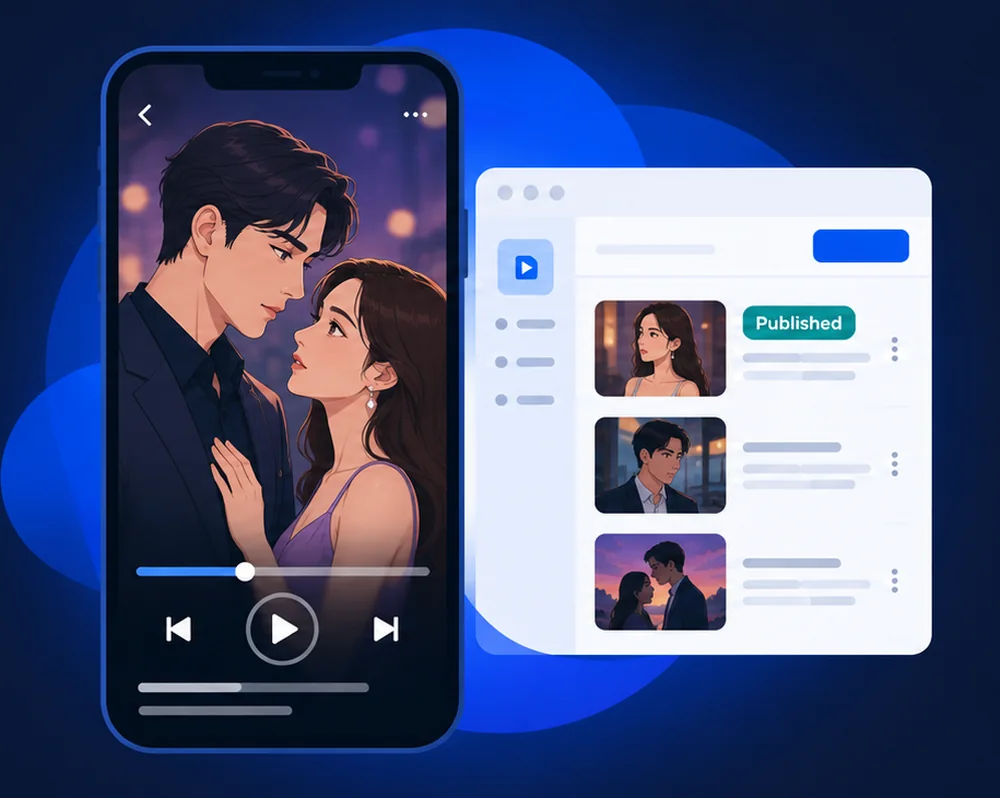
Illustration of a short drama playing in portrait on a phone beside a publishing panel with an episode marked published
Discuss your streaming app project

Fields marked * are required. We reply within one business day, and your details are never shared.